On this page
A skincare brand can choose and purchase its own bottles, jars, tubes, pumps, or other packaging, then ask a contract manufacturer to fill them. But buying the packaging yourself does not remove the need to evaluate the packaging with the actual formula before production.
The practical question is how the brand, the packaging supplier, and the skincare manufacturer coordinate their work. A supplier may be responsible for manufacturing and delivering the agreed packaging, while the manufacturer needs to understand whether the supplied components can be filled, assembled, and used with the proposed skincare product. The brand coordinates decisions and supplier follow-up, especially when it selected and purchased the packaging independently.
Rixin Skincare works with customer-sourced packaging. The process includes requesting packaging samples, communicating with the nominated supplier, reviewing relevant material information, evaluating samples with the actual product formula, and inspecting bulk packaging when it arrives. The checks performed and any additional documentation depend on the particular project; passing one review is not a blanket guarantee of finished-product safety or future batch performance.
This guide focuses on how to manage buyer-supplied packaging from the first sample to bulk filling. If you have not selected the packaging format yet, start with the broader Packaging & Label Design considerations for your product.
What does a manufacturer need before reviewing your packaging?
Start by identifying the exact packaging configuration you intend to purchase and the supplier who will provide it. A photograph or a bottle shape alone is not enough to evaluate an assembled product.
For a typical Rixin project, the first practical inputs are:
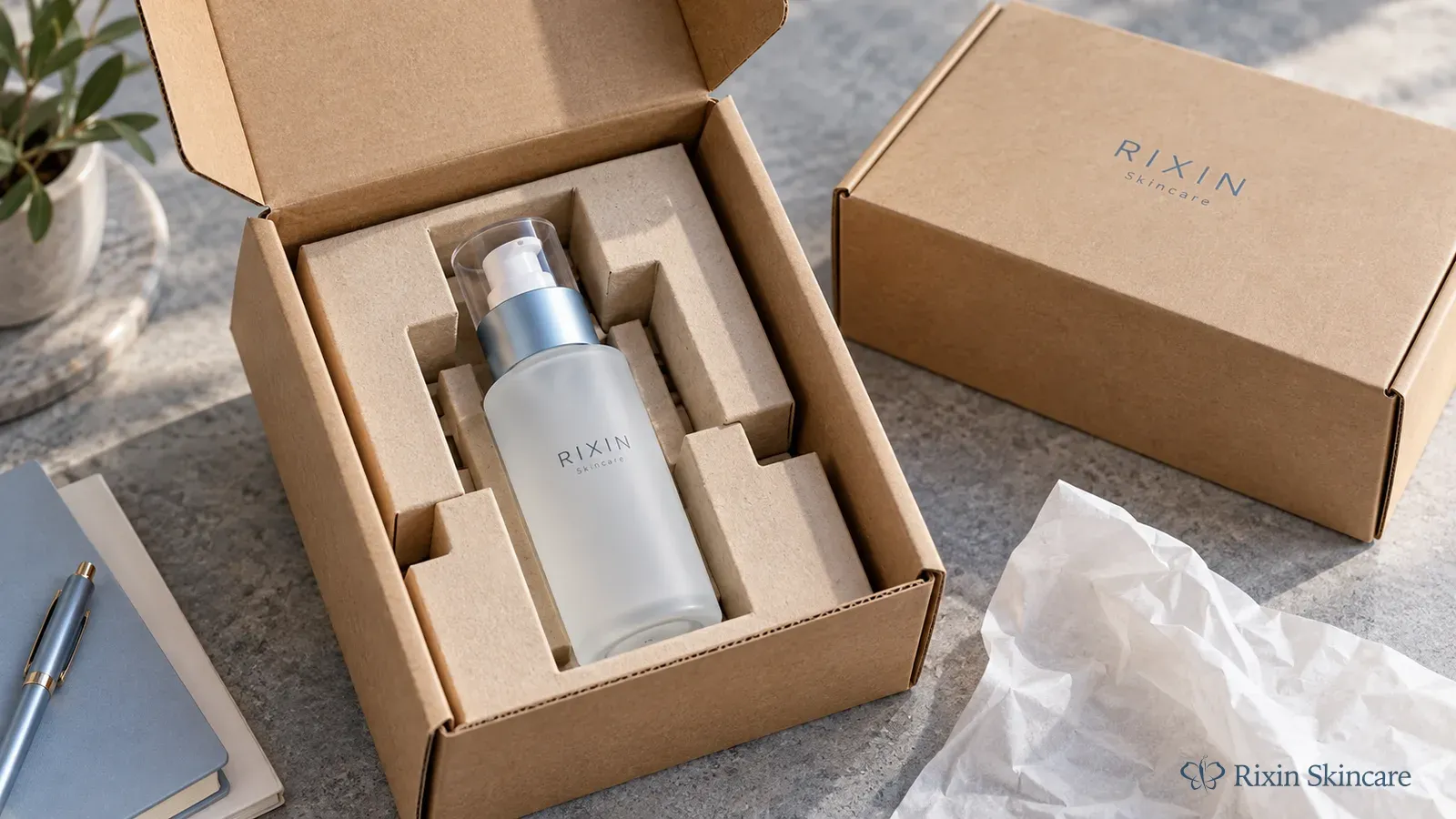
- Physical packaging samples. Send the proposed container and the components intended to be used together, such as the pump, cap, closure, liner, or other relevant parts.
- Information about the packaging materials. Identify the materials used for the container and, where relevant, the parts that may contact the formula. This helps identify questions that need further review.
- A route to the packaging supplier. The brand can introduce the supplier so Rixin can discuss the particular package assembly, request samples, and clarify any issue that appears during evaluation.
- The intended product and filling arrangement. The manufacturer needs a clear understanding of the formula being developed and the packaging combination proposed for the finished product.
Rixin does not normally require a complete set of bottle-manufacturing drawings or a detailed explanation of how the supplier makes the container merely to begin its packaging review. If available material information raises a compatibility concern, the team may request additional supplier reports or technical information relevant to that concern.
This is a practical starting point, not a universal documentation minimum. A particular component, product type, destination market, or supplier issue may require more information. Supplier material documents can help define what is being supplied, but they do not replace evaluation of the actual formula–package combination.
Why test the actual formula in the supplied packaging?
An empty package can look appropriate and still present problems after filling. For example, a pump may not dispense the product smoothly, or the selected container and closure may not behave as expected when used together.
Rixin evaluates customer-provided packaging samples using the actual formula intended for the project. Depending on the pack and product, the work can include examining filling fit, pump operation, ease of dispensing, relevant closure or leakage behavior, and potential formula–packaging compatibility concerns.
Dispensing checks and compatibility evaluation answer different questions. A pump that delivers lotion during a short demonstration has not thereby established the long-term suitability of its contact materials. Compatibility assessment may require a longer observation period, and the applicable scope depends on the defined materials, formula, and proposed product.
The purpose of these checks is to identify observable issues before the brand commits to using the package at scale. They cannot prove that every conceivable defect has been ruled out. The brand should also distinguish an observation made during sample evaluation from the results of any longer-running assessment.
What happens when a sample shows a problem?
Finding a problem should start a specific conversation, not an automatic decision about every unit the supplier produces. Rixin communicates the issue to the customer, who can then discuss correction or replacement with the packaging supplier. When useful, the manufacturer and supplier can communicate directly about the particular package configuration.
The next action depends on the nature of the finding:
| Finding | Practical next step |
|---|---|
| A minor dispensing or handling issue | Explain the observed limitation to the brand and discuss whether an adjustment is desirable. A decision to proceed needs to be informed and appropriate to the project. |
| A component or assembly mismatch | Ask the supplier to clarify the parts supplied or propose a correction, then evaluate the revised assembly. |
| A possible formula-contact, sealing, or contamination concern | Treat the issue as a material concern, advise against using the affected configuration until it has been addressed, and review the supplier’s proposed solution. |
| A test is still in progress and no issue has yet been observed | Tell the customer what has and has not been completed; no observed issue to date is not the same as a completed evaluation. Recommend waiting for complete results where feasible. If the customer requests earlier progress, document the outstanding assessment and foreseeable risks, then determine whether the proposed next step meets applicable safety, quality, contractual, and target-market requirements. |
If an unresolved issue carries potential product-safety implications, a customer’s written acknowledgment alone cannot establish that the packaging is suitable or remove applicable safety and quality obligations. The manufacturer and brand need to determine whether the product can appropriately proceed under the relevant requirements. Written records may document discussions and decisions, but they are not a substitute for necessary technical or regulatory assessment.
Does a packaging change require new samples and testing?
Yes: Rixin asks the supplier to send revised samples when the packaging has been changed. What is retested depends on what changed.
If the material stays the same but a component is adjusted
Suppose a supplier changes the pump construction to improve dispensing while the relevant formula-contact materials remain unchanged. Rixin can focus the renewed evaluation on the modified component and its performance with the actual formula. A complete repeat of the earlier long-term material-compatibility assessment may not always be necessary, provided the earlier evidence remains applicable to the unchanged materials and the new configuration has been appropriately assessed.
The final confirmed package may also be retained for ongoing observation or follow-up checks. Such observation is useful for tracing a later issue, but it should not be described as automatically replacing a required complete assessment.
If a formula-contact material changes
A change to the bottle material, seal, or another part that directly contacts the formula changes the basis on which the earlier compatibility conclusion was made. Rixin therefore requires new samples and renewed formula–packaging compatibility testing for the changed material or combination.
A revised package may look identical to the original. That visual similarity does not make earlier material-specific results transferable to the new assembly.
For the separate buyer task of deciding whether a particular report covers the correct formula and packaging, Rixin’s Quality, Testing & Documentation information provides additional context on project-specific checks and documentation.
When does the customer approve the finished product sample?
The customer’s final sample approval normally happens before the customer sends bulk packaging to Rixin. This is an important sequence to plan around.
After the formula and packaging direction have been developed, Rixin prepares a representative filled product using the customer’s selected packaging. Where the project includes an outer carton or other finished presentation details, those may also be included in the sample sent to the customer. The customer can then review what the intended finished product looks like and how its packaging is assembled.
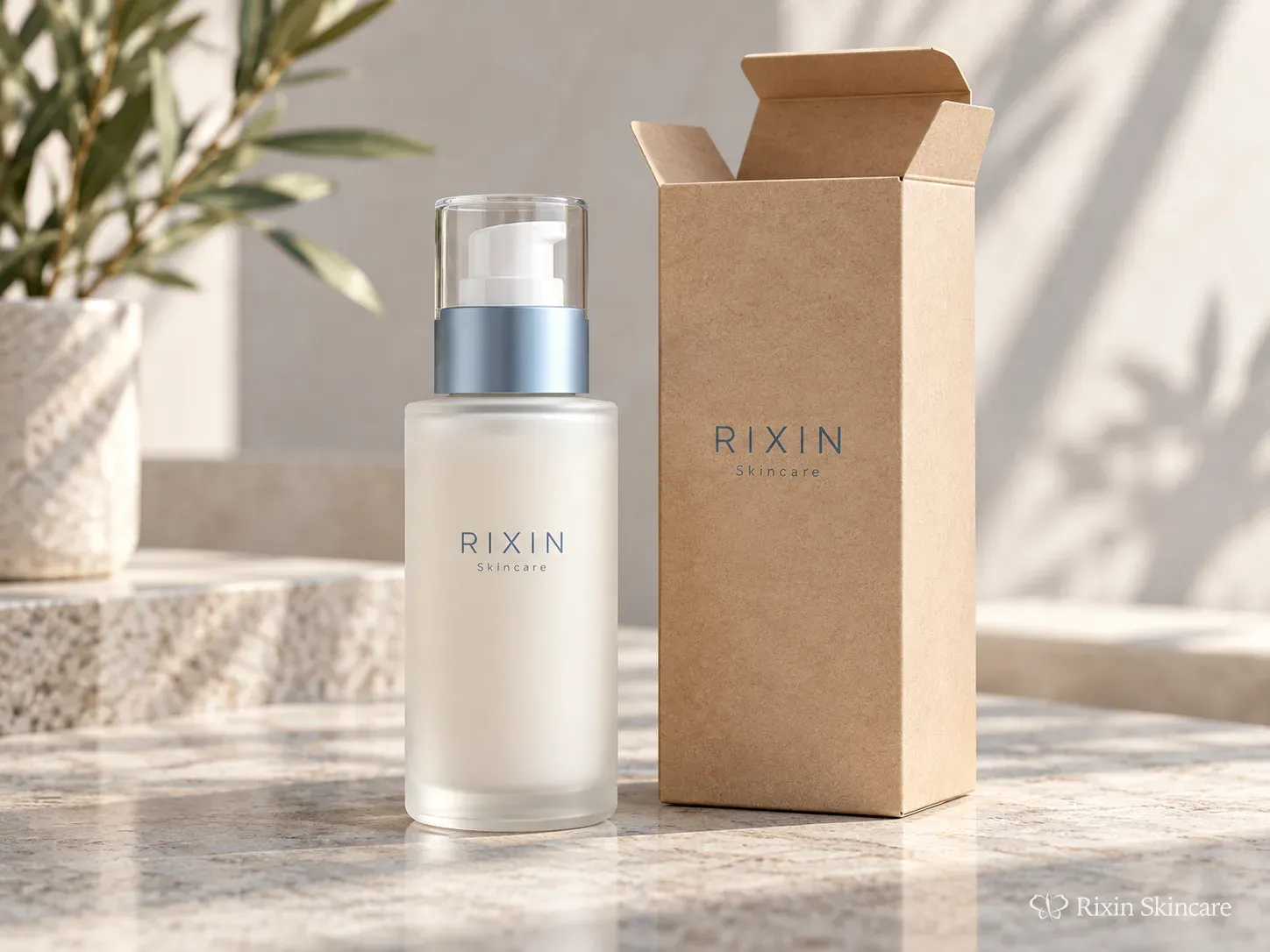
Rixin obtains written confirmation, typically by email, that the customer approves the sample and packaging arrangement. This establishes the agreed reference for subsequent production, subject to the approved specifications and any relevant manufacturing tolerances. It does not replace the remaining incoming inspections or project-specific quality requirements.
Only after this approval does the customer normally arrange for the supplier to deliver the bulk packaging. That sequence helps avoid purchasing a full batch against a package configuration that has not yet been accepted.
Rixin’s Sampling & Formula Approval process is the related service route for understanding sample review and customer confirmation in a broader skincare development project.
Why inspect bulk packaging after the sample is approved?
An approved sample represents a particular configuration. It does not establish that every later shipment or production lot matches that reference.
When customer-supplied packaging arrives at Rixin, the team carries out incoming inspection for the received batch. That includes checking the supplied packaging against the approved sample and conducting sampling-based checks for relevant discrepancies or observable defects. The inspection is documented internally.
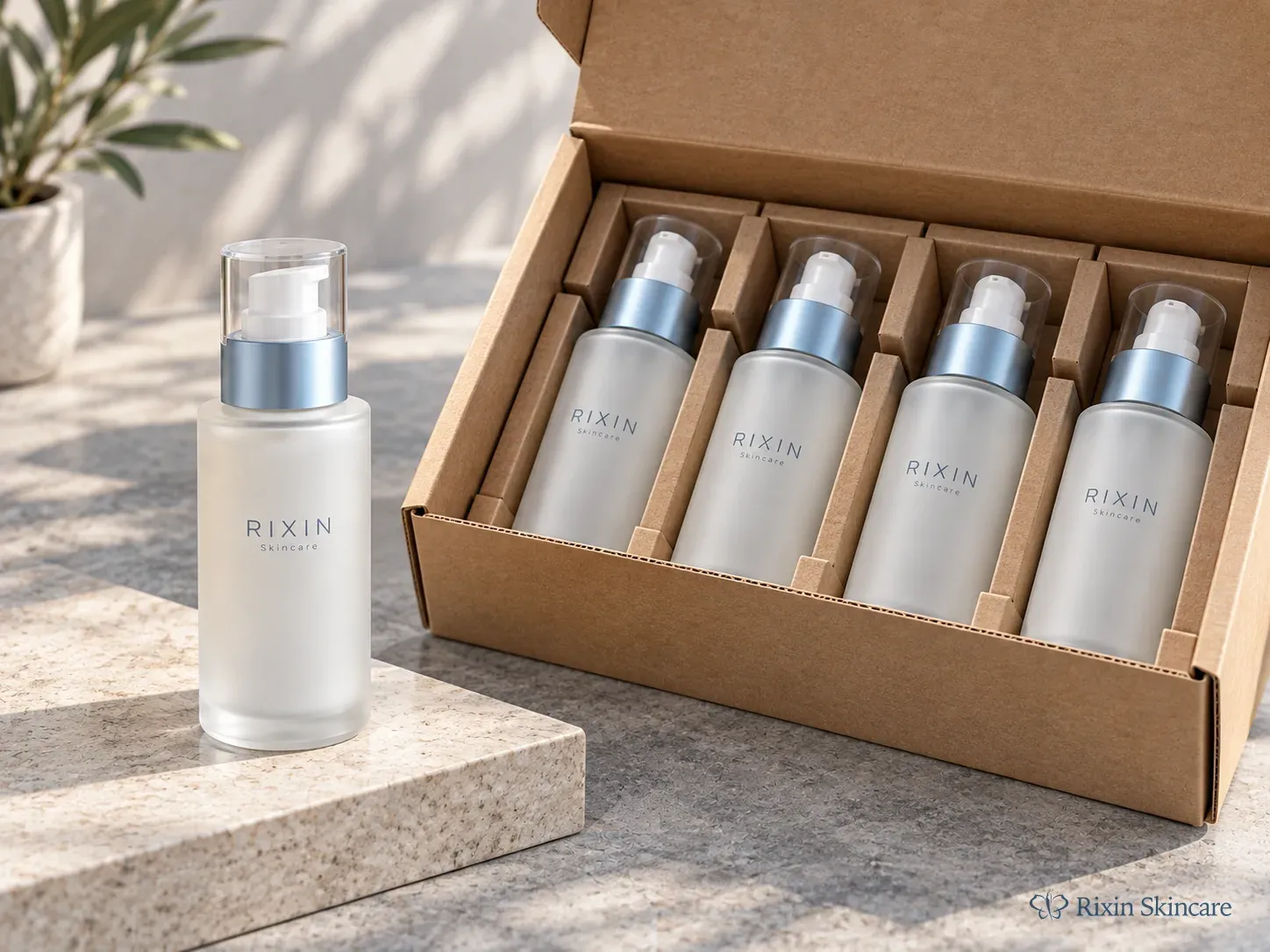
This is batch incoming inspection, not a claim that every individual container undergoes every possible test or that every shipment repeats the full long-term compatibility program. The exact inspection scope depends on the packaging and project.
If the shipment differs from the approved sample, Rixin informs the customer and asks whether the change was discussed with the packaging supplier. If the brand and supplier confirm the revised configuration and Rixin’s relevant evaluation finds no issue, production may proceed when the other project conditions are met. If the change creates an actual functional or technical problem, the customer and supplier need to resolve it before the affected packaging can be treated as usable.
A supplier saying that a change is acceptable is not the same as the manufacturer confirming that the delivered package works with the intended product.
Who handles supplier reports and quality records?
There are two different sources of information in a buyer-supplied packaging project:
- The packaging supplier’s technical information and supporting reports. The brand normally requests relevant material details, supplier reports, and packaging-specific evidence from the supplier it selected.
- Rixin’s internal inspection and evaluation records. Rixin generally keeps its incoming inspection and sample-evaluation records internally for quality follow-up and traceability. It communicates material findings to the customer and may share relevant internal reports or supporting evidence when a problem requires the customer’s involvement.
These records serve different purposes. A manufacturer inspecting the packaging does not thereby become the author of the supplier’s material specifications. Likewise, a supplier’s report cannot prove that a particular finished formula–package combination was evaluated unless that is actually within the report’s scope.
For the customer, the practical approach is to know which document should come from which party, and to keep a clear record of any issue, requested modification, and eventual agreed outcome. Availability and disclosure of particular internal records remain subject to the project’s circumstances.
Who is responsible if the packaging arrives late or the quantity is short?
When a brand buys packaging independently, it normally manages its own supplier’s delivery commitments, shortages, and corrections. Rixin can communicate about technical issues, but the customer is responsible for resolving procurement and supply problems with the supplier it chose.
Some manufacturing preparations can proceed while packaging is outstanding. For example, Rixin may continue appropriate formula-ingredient purchasing, incoming material inspection, or other work that does not depend on the missing packaging.
Bulk filling, however, needs usable packaging to be available at the factory. When a shipment is late, insufficient, or not accepted for use, the filling schedule may need to be coordinated again. Other preparatory work does not guarantee that the original filling date can be maintained.
Brands can reduce avoidable disruption by agreeing with the packaging supplier on the final approved configuration, shipment plan, quantity, and how replacement parts will be handled if the delivered items do not pass incoming checks.
A practical handoff sequence for buyer-supplied packaging
For a brand preparing to source its own packaging, the project can be organized around six decisions:
- Nominate the packaging and supplier. Identify the complete intended package and share samples and relevant material information.
- Evaluate the package with the intended formula. Review dispensing and assembly behavior, and complete the compatibility assessment required for the proposed materials and product.
- Resolve issues and retest changed parts. Obtain revised samples whenever the supplier makes a change. Reassess the relevant functions; repeat compatibility testing when product-contact materials change.
- Approve a representative finished-product sample. Review the filled package and, where relevant, the outer carton, then provide written confirmation before sending the bulk packaging order to the factory.
- Coordinate delivery of approved bulk packaging. The customer manages the supplier’s shipment and any shortage or correction; the manufacturer prepares the work it can complete in parallel.
- Review each received batch before filling. Incoming inspection checks the delivered packaging against the approved sample and identifies issues that need to be addressed before use.
This sequence keeps sample approval, supplier responsibility, and incoming batch acceptance separate. The process is not complete merely because an attractive container has been selected or an empty sample arrived in good condition.
Frequently asked questions
Can I send packaging from my own supplier to Rixin Skincare?
Yes. Rixin accepts customer-sourced packaging for project review and can communicate with the nominated supplier. Samples need to be evaluated with the actual formula, and the proposed package must meet the applicable project requirements before it is used.
Does Rixin need the supplier’s complete bottle-design drawings?
Not normally as a starting requirement. Material information and physical samples are usually more immediately useful. Additional technical records or reports may be requested if the material, component, or observed behavior raises a specific concern.
Do I have to approve the completed product before shipping bulk packaging?
In Rixin’s normal process, the customer reviews a filled, representative finished-product sample—including outer packaging where applicable—and confirms the sample and package arrangement in writing before the supplier sends the bulk packaging to Rixin.
If the supplier changes a pump, must every test be repeated?
Not necessarily. Rixin requests revised samples and evaluates the change. A targeted reassessment may be appropriate if the relevant materials are unchanged; a change to formula-contact materials requires renewed compatibility testing. The exact scope depends on the change and the earlier evidence.
Will Rixin provide every internal test report automatically?
No. Rixin generally retains its internal inspection and evaluation reports. Relevant findings are communicated to the customer, and related internal evidence may be shared when a problem needs to be addressed. Supplier-specific material documents should normally be requested from the packaging supplier.
The important distinction: owning the packaging does not mean reviewing it alone
A brand that supplies its own cosmetic packaging can retain control over its chosen supplier and package design while working with a manufacturer on filling suitability and product-specific evaluation. The manufacturer can help identify observed problems and check received packaging; the brand still needs to manage its supplier, approve the finished-product reference, and resolve sourcing issues.
The strongest handoff is not a blanket promise that a bottle is “safe” or that no future defect is possible. It is an agreed formula and package configuration, appropriate evaluation of that combination, documented customer approval, and incoming checks of the actual packaging delivered for production.