Sheet Masks
Single-use systems combining a facial sheet, essence, controlled fill, folding method, and sealed sachet. Fit, retention, unfolding, and package integrity should be reviewed together.
Facial Mask Development for Beauty Brands
Develop sheet, gel, cream, or sleeping masks around your intended use, texture, packaging, target market, and commercial requirements.
We review how the formula, feel, mask material or dispenser, packaging, filling, sealing, and testing work together before production.
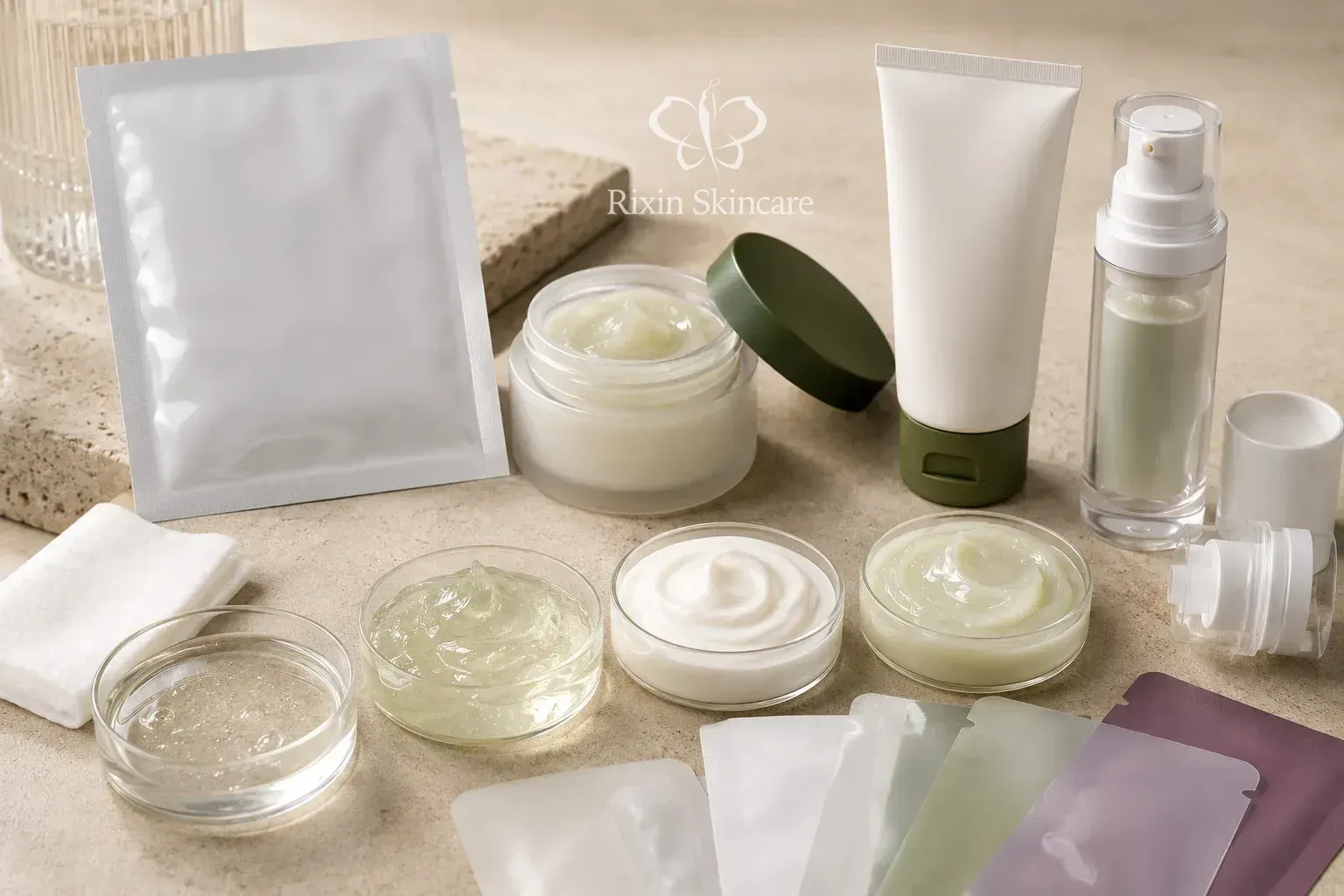
Product Formats
Choose the format first because it changes how the mask is used, what formula it needs, how it is packed, and what you must approve in samples.
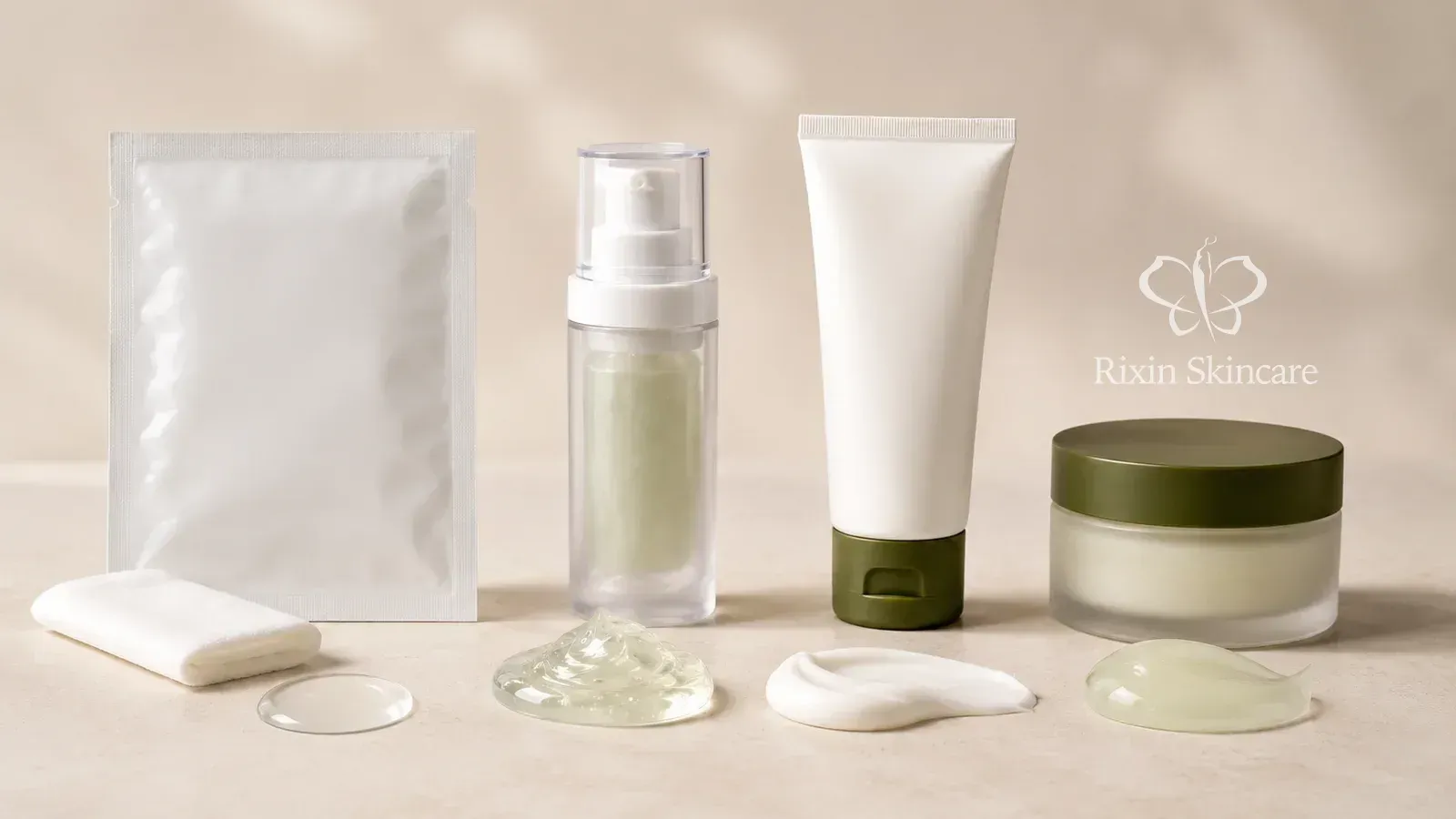
Single-use systems combining a facial sheet, essence, controlled fill, folding method, and sealed sachet. Fit, retention, unfolding, and package integrity should be reviewed together.
Lightweight or cushioning gels defined by spreadability, drip control, application thickness, removal method, and packaging compatibility.
Richer emulsion formats defined by coverage, slip, tack, removal behavior, and dispensing.
Overnight leave-on formats requiring attention to absorption, dry-down, tack, transfer, and packaging suitability.
Project Route
Start with private label when an existing Rixin formula and format can meet your brief, followed by agreed adjustments to packaging, artwork, and order details.
Explore Private Label SkincareChoose custom development when you need a new or substantially changed formula, mask material, dispenser, package, or performance target.
Explore Custom FormulationStart with private label when an existing formula can meet your brief. Move to custom development when changes require new formula, mask material, filling, sealing, or packaging validation.
Commercial Planning
Minimum order quantity (MOQ) starts from 2,000 units per product. Final requirements can also depend on formula, mask material, packaging-component, and printing minimums.
Typical production period is about 40 days after the final formula, packaging, artwork, and order details are confirmed. Development, sampling, feedback, revisions, and approvals are not included. Mask material, packaging, testing, the target market, and project scope can affect the overall timeline.
Formula Brief
Start by defining whether the mask is single-use, wash-off, leave-on, or overnight, plus the texture and intended wear time.
Describe the skin feel, absorption, residue, finish, fragrance, appearance, and packaging direction. These choices guide formulation, filling, package selection, and sampling.
Packaging Fit
Sheet masks normally use individual sachets. We review barrier needs, fill, sealing, and transport performance.
Repeated-use gel, cream, and sleeping masks may use jars, tubes, pumps, or airless packaging. We assess whether the formula can be filled, sealed, dispensed, and remain suitable in the selected package.
Review Packaging and Label Support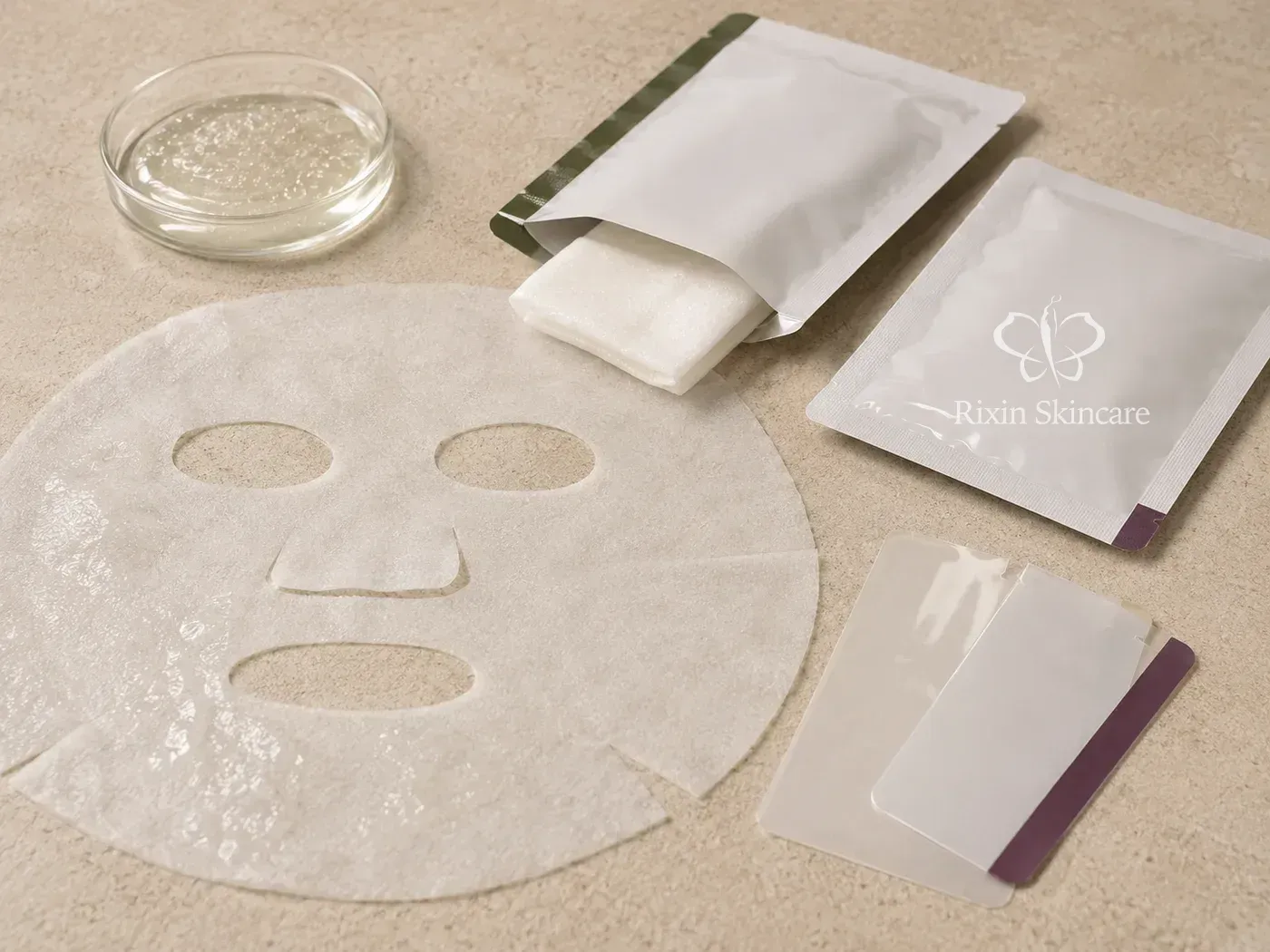
For Sheet-Mask Projects
Define the mask material, thickness, softness, face shape, cut, and fit. The essence and fill amount affect sheet absorption, release, retention, and unfolding.
Then review folding, sachet dimensions, barrier needs, sealing, and sample approval. Available materials and specifications require project confirmation.
Ingredient Review
Projects may consider hyaluronic acid, beta-glucan, polyglutamic acid, Tremella polysaccharide, peptides, or other cosmetic directions aligned with the brief.
An ingredient must work in the chosen formula and package, stay stable through its shelf life, suit the target market, and support the wording you plan to use. Supplier information alone does not prove finished-product performance.
Explore Skincare Ingredient DirectionsProject Readiness
Before production, we confirm the checks and documents your specific formula, mask material, package, and destination market require.
Examples may include stability, microbiological assessment, formula-to-sheet or package fit, seal performance, specifications, ingredient lists, supporting documents, and label or claim review. Requirements depend on the agreed scope and do not guarantee market authorization.
Review Quality, Testing & DocumentationProject Requirements
Include the information that is already available:
Buyer Questions
Sheet masks combine a substrate, essence, fill, folding method, and sachet. Gel and cream masks center on application, viscosity, removal, and dispensing. Sleeping masks add overnight dry-down, tack, and transfer considerations.
Confirm the sheet, shape and fit, essence viscosity, loading, folding, sachet, sealing, decoration, market, and quantity.
Yes. It can communicate texture, application, finish, sheet feel, packaging, or positioning, but it does not define an identical formula, material, claim, or result.
Provide the market, format, application, formula status, ingredient and sensory direction, references, sheet or packaging requirements, quantity, testing, documentation, and timing.
Start With a Defined Brief
Share the target market, mask format and intended use, formula status, mask material or packaging direction, quantity, and launch timing. We’ll review the suitable route, key feasibility questions, and the information needed to prepare sampling.
Request a Facial Mask Proposal