Product Capabilities

Specialty Product Development

Cooling Skincare Product Development & Manufacturing

For skincare brands, develop cooling products for the face, body, scalp, masks, and sun-care applications.

Rixin helps turn your cooling-product idea into a clear brief for formula, packaging, market review, and sampling. Start from a suitable existing formula or choose custom formulation when the required feel or format needs more development.

Share your concept, target market, and reference products. We’ll identify the suitable route and the next sampling requirements.

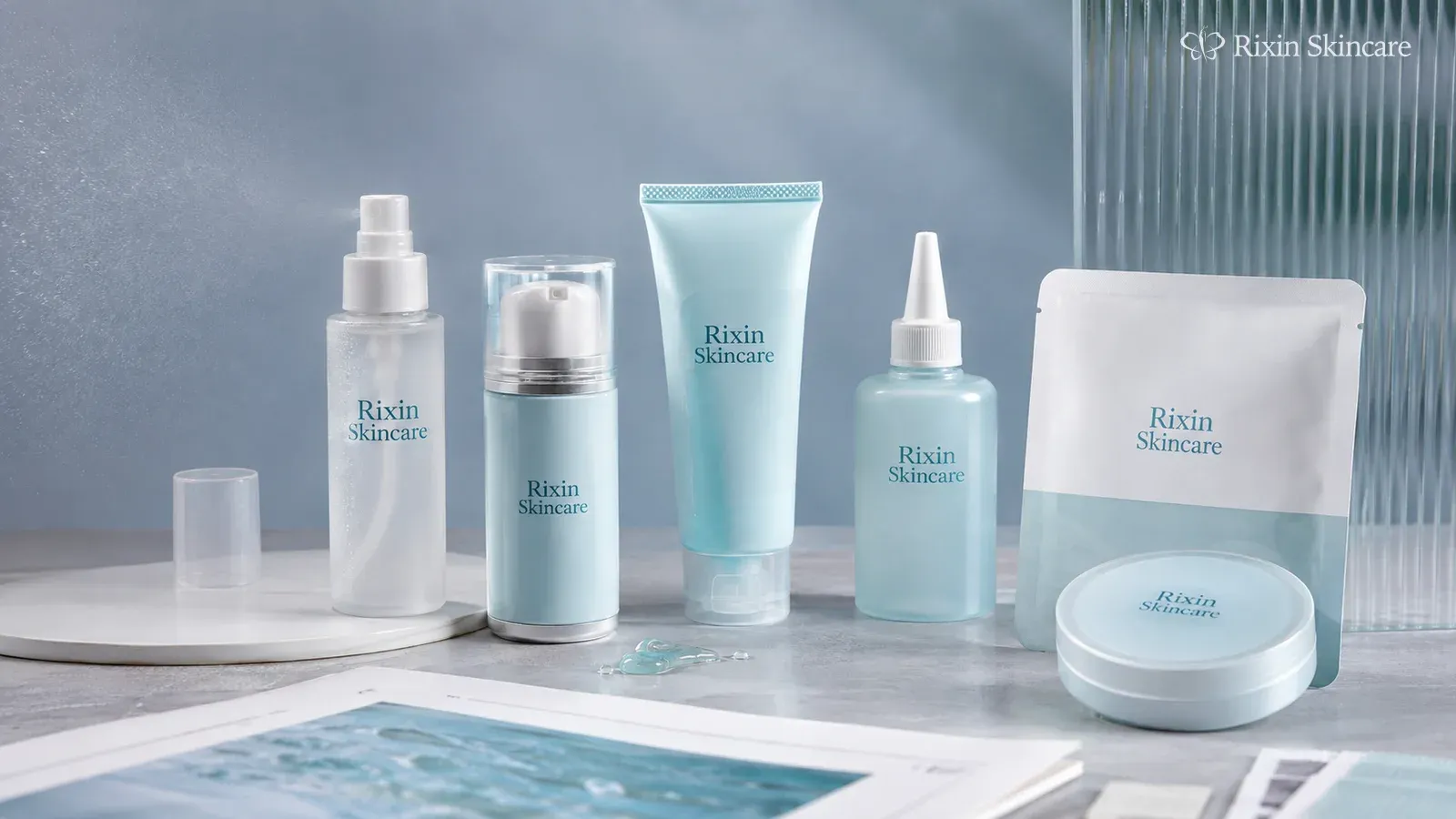
Rixin Skincare cooling product range with face mist, body spray, gel serum, scalp applicator, sun-care tube, and mask pouch

Product Directions

Cooling Can Be Built Into More Than a Face Mist

Cooling is a sensory direction that can be developed across different skincare formats. The right format depends on where the product will be used, how noticeable the cooling should feel, what other skincare benefit the product should deliver, and how the finished formula needs to be applied.

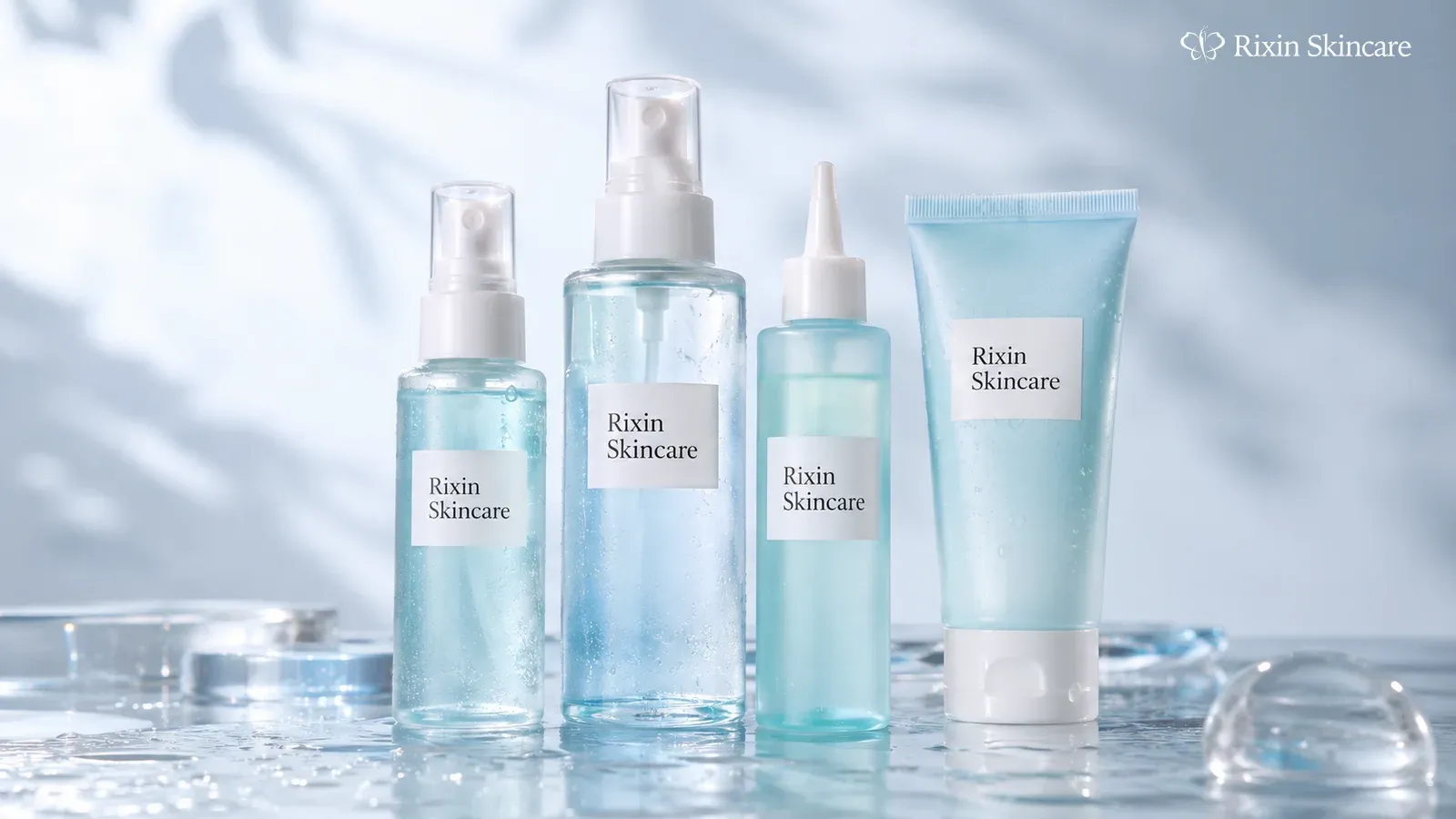
Rixin Skincare face mist, body spray, scalp applicator, and sun-care tube arranged as a coordinated cooling skincare range
02

Body

Possible directions include cooling body mists, refreshing sprays, lightweight gels, and lotions for warm-weather, outdoor, travel, or post-workout product concepts.

Define the intended intensity, dry-down, residue, fragrance, and application area before formulation work begins.

Explore Body Care
03

Scalp

Possible directions include cooling scalp mists, sprays, tonics, and lightweight scalp serums.

Consider cooling intensity, targeted dispensing, scalp coverage, hair residue, fragrance, finish, and the scalp-care direction.

Explore Hair & Scalp Care
04

Sun & After-Sun

Cooling can also be explored in sun-care and after-sun concepts, including lightweight sunscreen formats, refreshing after-sun mists, and cooling gels.

The target market and evidence for any performance or temperature-related claims must be reviewed for the finished product.

Explore Sunscreen Development

Sensory Target

Choose the Cooling Experience Before Choosing the Cooling System

“Cooling” is not one fixed sensation. A buyer may want a soft fresh feeling for a facial product, a clearly noticeable cooling effect for a daily mist, or a stronger sensory direction for a body product.

Describe the feeling you want first—gentle, refreshing, or stronger—so the formula can be developed around that target.

Gentle Cooling

A softer cooling direction may suit facial products, masks, gel textures, or after-sun concepts where comfort is more important than an intense cold sensation.

The brief can prioritize a subtle fresh feeling, low odor, a comfortable finish, and suitability for repeated cosmetic use.

Refreshing Cooling

A more noticeable but balanced cooling direction can suit face mists, body mists, scalp sprays, and daily warm-weather products.

The target may combine a clear fresh sensation with a lightweight, non-heavy finish and a cooling experience that does not dominate the rest of the formula.

Stronger Cooling

Body, outdoor, or post-workout concepts may call for a stronger perceived cooling effect.

A stronger target still needs to be reviewed against the application area, formula format, fragrance, user comfort, ingredient suitability, and intended market. More cooling is not automatically better for every product.

The final sensory profile can be influenced by the selected cooling material or system, formula format, application area, texture, fragrance, alcohol content, evaporation, supporting ingredients, and the finished-product use conditions.

The development target should describe the experience you want the consumer to feel rather than assume one ingredient or concentration will produce the same result in every formula.

Before Sampling

Define the Product Brief Before Fine-Tuning the Formula

A useful cooling skincare brief does not need to specify every ingredient. It should make the desired product experience clear enough for formulation and packaging decisions to begin.

Decision
What to Define
Product format
Mist, spray, toner, serum, gel, cream, mask, scalp product, or sun-care format
Application area
Face, body, scalp, or another clearly defined cosmetic use area
Cooling intensity
Gentle, refreshing, stronger, or a reference product to benchmark
Cooling onset and feel
Fast fresh sensation, softer onset, or a more sustained sensory direction
Supporting benefit
Hydration, skin comfort, lightweight body care, scalp care, or another cosmetic direction
Texture and finish
Watery, fast-drying, jelly, lightweight, creamy, low-residue, or another target
Fragrance
Fragrance-free, neutral, mint-like, or another fragrance direction
Alcohol preference
Whether an alcohol-free direction is required or alcohol can be considered
Target market
Country or region where the product is intended to be sold
Packaging
Bottle, pump, sprayer, tube, jar, mask pouch, scalp applicator, or reference package
Reference product
A benchmark for texture, spray, cooling sensation, or finish
Claims
The exact consumer-facing benefit the brand hopes to communicate

A reference product can be useful for communicating the desired sensory target, but it should be treated as a benchmark rather than a promise of exact duplication. Formula feasibility, material availability, packaging, claims, and market requirements still need project-level review.
Prepare Your Project Requirements

Project Brief

What to Send Us for a Cooling Skincare Project

You do not need a finished formula before contacting Rixin. A clear product brief is more useful than a long ingredient list.

When available, send:

  • the product type and application area;
  • the target market;
  • the desired cooling intensity;
  • whether you want an immediate fresh feeling or a more sustained cooling direction;
  • the target texture and finish;
  • fragrance preferences;
  • whether an alcohol-free direction is required;
  • preferred ingredients or ingredients to avoid;
  • reference products;
  • packaging ideas or reference packaging;
  • expected order quantity;
  • target launch timing;
  • the claims you would like to explore.

If some of these details are not decided yet, send the product concept and reference products first. The remaining decisions can be clarified during project review.

Formula Direction

Build the Cooling Effect Around the Skincare Benefit

A cooling product should still have a clear reason to exist as a skincare or personal-care product. The cooling sensation can be paired with hydration, skin-comfort, lightweight body care, scalp care, or other appropriate cosmetic directions depending on the format.

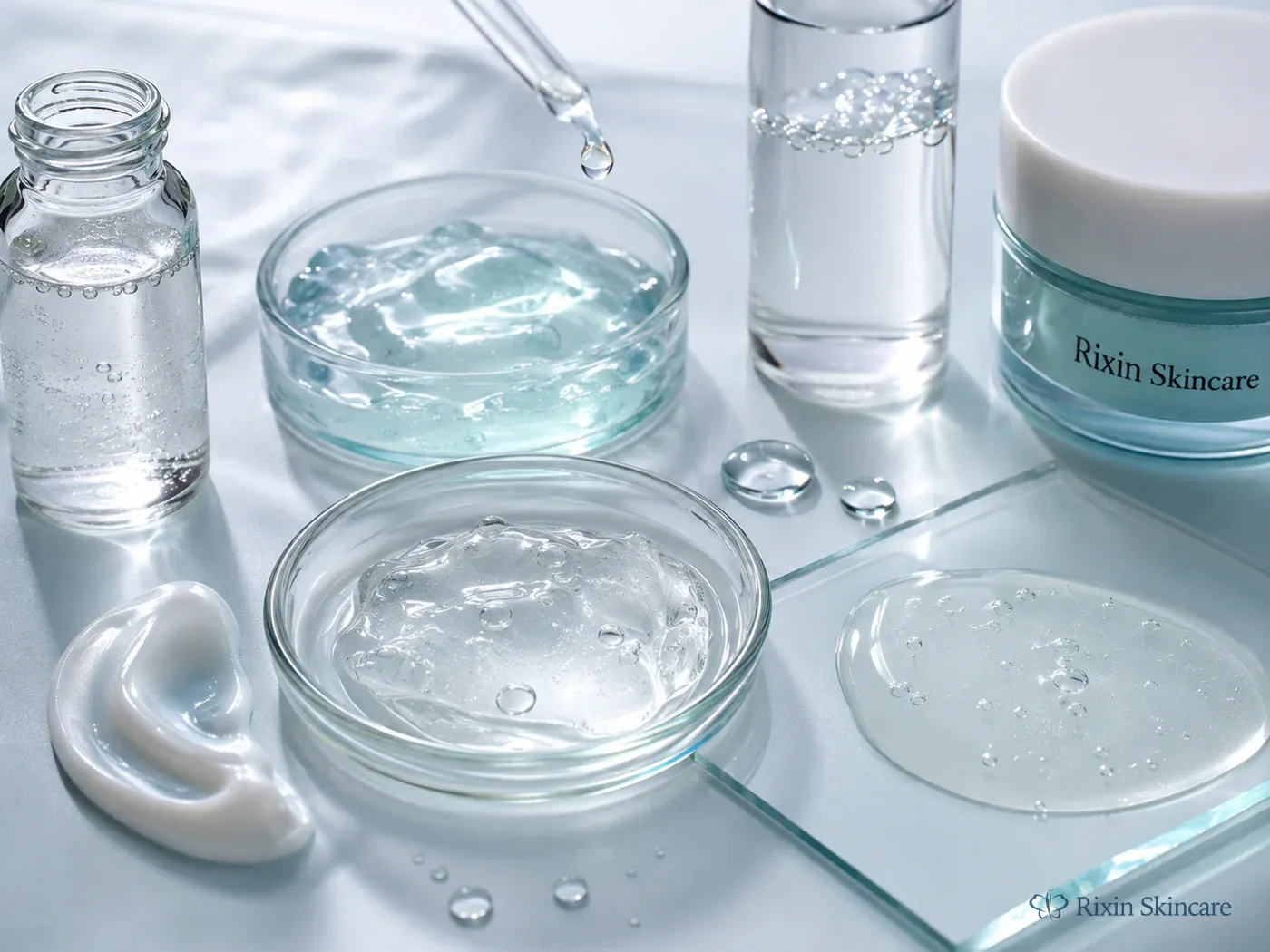
Clear gel, jelly serum, essence, lotion, and water-like droplets arranged for cooling skincare formulation development

Cooling System Options

Cooling-system directions may include materials such as Menthoxypropanediol, Methyl Diisopropyl Propionamide, Menthyl Lactate, Menthol, or other supplier systems selected for the project.

These materials can differ in sensory onset, intensity, duration, odor, skin feel, compatibility, and suitability for different applications.

Rixin confirms the exact ingredient and how it is used during formula development; an ingredient name alone does not define the finished product. Suitability still depends on the complete formula, target market, and material review.

Hydration

Cooling mists, gels, serums, and lightweight lotions can be built around a hydration direction using suitable humectants and skin-conditioning ingredients.

Depending on the project, examples may include glycerin, betaine, hyaluronic acid, or sodium PCA.

Skin Comfort & Barrier Support

For products intended to feel comfortable rather than sharply cooling, the formula can be developed around ingredients commonly used in skin-comfort or barrier-supporting directions.

Depending on the project, examples may include panthenol, ectoin, beta-glucan, allantoin, centella-derived ingredients, or ceramide systems.

Scalp Care

Cooling scalp products can combine the sensory experience with a lightweight scalp-care direction.

Depending on the brief, ingredients such as niacinamide, panthenol, zinc PCA, or betaine may be considered, subject to formula compatibility, intended use, and target-market review.

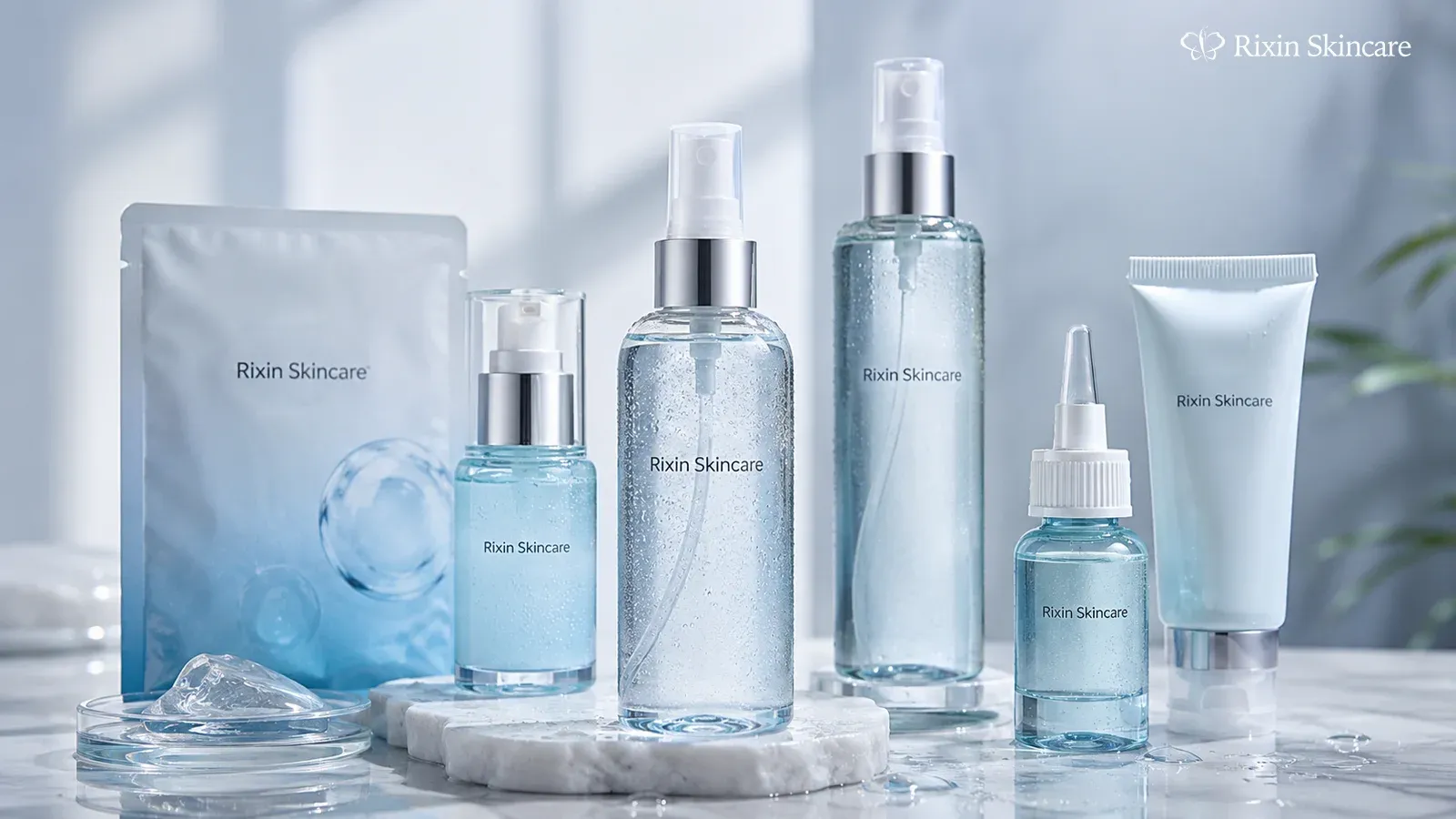
Rixin Skincare fine-mist sprayer, airless bottle, gel tube, scalp applicator, and mask packaging arranged for delivery-system review

Formula + Package

The Delivery System Changes How a Cooling Product Performs

Choose the package with the formula. A gel, fine mist, scalp nozzle, tube, and mask can each change how the product applies and feels.

Packaging should therefore be reviewed alongside the formula rather than selected only after the sensory target is finalized.

Mist & Spray

Key considerations can include mist fineness, spray pattern, nozzle performance, clogging risk, leakage, viscosity, repeated application, and residue on skin or hair.

Gel & Jelly

Viscosity, pickup, spread, pumpability, tube or jar suitability, and the interaction between texture and cooling perception should be reviewed together.

Mask & Pad

The formula needs to work with the selected substrate and package. Essence loading, sealing, compatibility, and the sensory profile during wear can all affect the final product experience.

Scalp Application

Targeted dispensing, scalp coverage, applicator choice, hair residue, and repeat-use practicality are important for scalp-focused cooling products.

Explore Packaging & Label Design

Development Route

Start From a Suitable Formula or Build a More Specific Cooling Concept

The right development route depends on how specific the product brief is.

PRIVATE LABEL

Private Label

An existing formula may be a practical starting point when the product format and overall sensory direction already fit the project and only permitted adjustments are required.

The available formula, adjustment scope, packaging, target market, and requested claims still need to be reviewed for the specific project.

Explore Private Label Skincare
CUSTOM FORMULATION / OEM

Custom Formulation / OEM Manufacturing

Choose custom formulation when the required cooling feel, texture, format, package, or market requirements cannot be met by a suitable existing formula.

The development process can then evaluate the cooling system as one part of the complete formula rather than treating it as a standalone additive.

Explore Custom Formulation & OEM

Testing & Claims

Plan Testing Around the Finished Formula, Package, and Claim

A cooling sensation can be evaluated as part of the finished-product experience, but the testing plan should match what the brand intends to claim.

Depending on the product, package, market, and claim direction, the development program may need to consider sensory evaluation, stability testing, package compatibility, spray or nozzle performance, microbial or preservative-system evaluation, and other finished-product testing.

If a brand wants to make a quantitative statement about skin-surface temperature or cooling duration, the exact claim should be supported by appropriate testing on the finished product. Supplier data or information about an individual cooling ingredient should not be treated as proof of finished-product performance.

Therapeutic wording should also be avoided unless the product is deliberately developed and regulated for that use. A cosmetic cooling product should not casually be positioned as treating hot flashes, sunburn, pain, heat illness, inflammation, or another medical condition.

Explore Quality, Testing & Documentation

Concept Examples

Six Cooling Product Directions to Start a Development Brief

These examples show how the same cooling concept can be translated into different formats. They are development directions rather than guaranteed stock formulas, and the final formula depends on the requested sensory target, ingredients, package, market, and testing scope.

01

Cooling Hydration Face Mist

A fine facial mist with a gentle-to-refreshing cooling sensation and a hydration-led formula.

Useful brief points include mist fineness, residue, fragrance, alcohol preference, cooling intensity, repeated-use comfort, and the desired hydrating ingredients.

Explore Mist and Toner Formats
02

Cooling Body Mist

A lightweight body spray designed around a clearly noticeable fresh feeling and a clean dry-down.

The brief can define the application area, desired cooling strength, fragrance, skin feel, spray pattern, and whether the product is intended for general warm-weather, travel, outdoor, or post-workout use.

Explore Body Care
03

Cooling Scalp Refresh Mist

A targeted scalp mist or spray that combines a cooling sensation with a light, low-residue finish.

Development should consider the applicator, hair residue, scalp coverage, fragrance, cooling strength, and supporting scalp-care ingredients.

Explore Hair & Scalp Care
04

Cooling Jelly Serum

A watery or jelly serum that combines a fresh sensory effect with a lightweight hydration direction.

The cooling sensation should be developed together with viscosity, spread, absorption, layering, and the intended facial skin feel.

Explore Facial Serums
05

Cooling Gel or Mask Concept

A gel, sheet-mask, or hydrogel direction where the cooling sensation is part of the overall wear experience.

The project may need to consider essence viscosity, substrate compatibility, package sealing, hydration direction, and how the cooling profile changes during use.

Explore Facial Masks
06

Cooling Sun-Care Concept

A lightweight sun-care concept that combines the required sunscreen system with a cooling sensory direction.

The feasibility of the cooling system, claims, formula, testing, and labeling must be reviewed for the intended target market rather than carried over from a standard cosmetic mist or gel.

Explore Sunscreen Development

FAQ

Cooling Skincare Development Questions

Can you develop menthol-free cooling skincare?

Yes, a menthol-free direction can be reviewed. Cooling systems can use different materials with different sensory and odor profiles. The suitable option depends on the product format, application area, target cooling experience, complete formula, target market, and selected raw-material specifications.

Can the cooling intensity be adjusted?

Cooling intensity can be treated as a formulation target. A project can be briefed around a gentle, refreshing, or stronger sensory direction, but the final result depends on the complete formula, material selection, application area, package, and testing.

Can cooling systems be used in face, body, and scalp products?

Cooling concepts can be explored across different cosmetic formats, including facial, body, and scalp products. The appropriate system and sensory level should be reviewed separately for each application rather than assuming one formula or cooling level fits every use area.

Can I send a reference cooling product?

Yes. A reference product can help communicate the cooling sensation, texture, fragrance, spray pattern, finish, or overall user experience you want to target. It should be used as a benchmark rather than a guarantee of exact duplication.

Can cooling skincare be fragrance-free or alcohol-free?

A fragrance-free or alcohol-free direction can be part of the development brief. Feasibility depends on the complete formula, desired sensory profile, preservation approach, packaging, and target-market requirements.

What testing may be needed for a cooling claim?

Testing depends on the exact claim. General product development may include stability, compatibility, sensory, microbial, and packaging-related evaluation as appropriate. Quantitative temperature or duration claims require evidence that supports the specific wording used for the finished product.

Start Your Project

Turn a Cooling Product Idea Into a Clear Development Brief

Tell us what you want to make, where it will be used, how strong the cooling should feel, and what reference products or packaging you have in mind.

Rixin can review the concept together with the formula direction, supporting skincare benefits, packaging, target market, claims, and testing needs before the project moves into sampling.