Primary Functions
- Hydration support
- Comfort-focused skincare
- Barrier-supporting direction
- Texture and film direction
Beta-Glucan Skincare Development
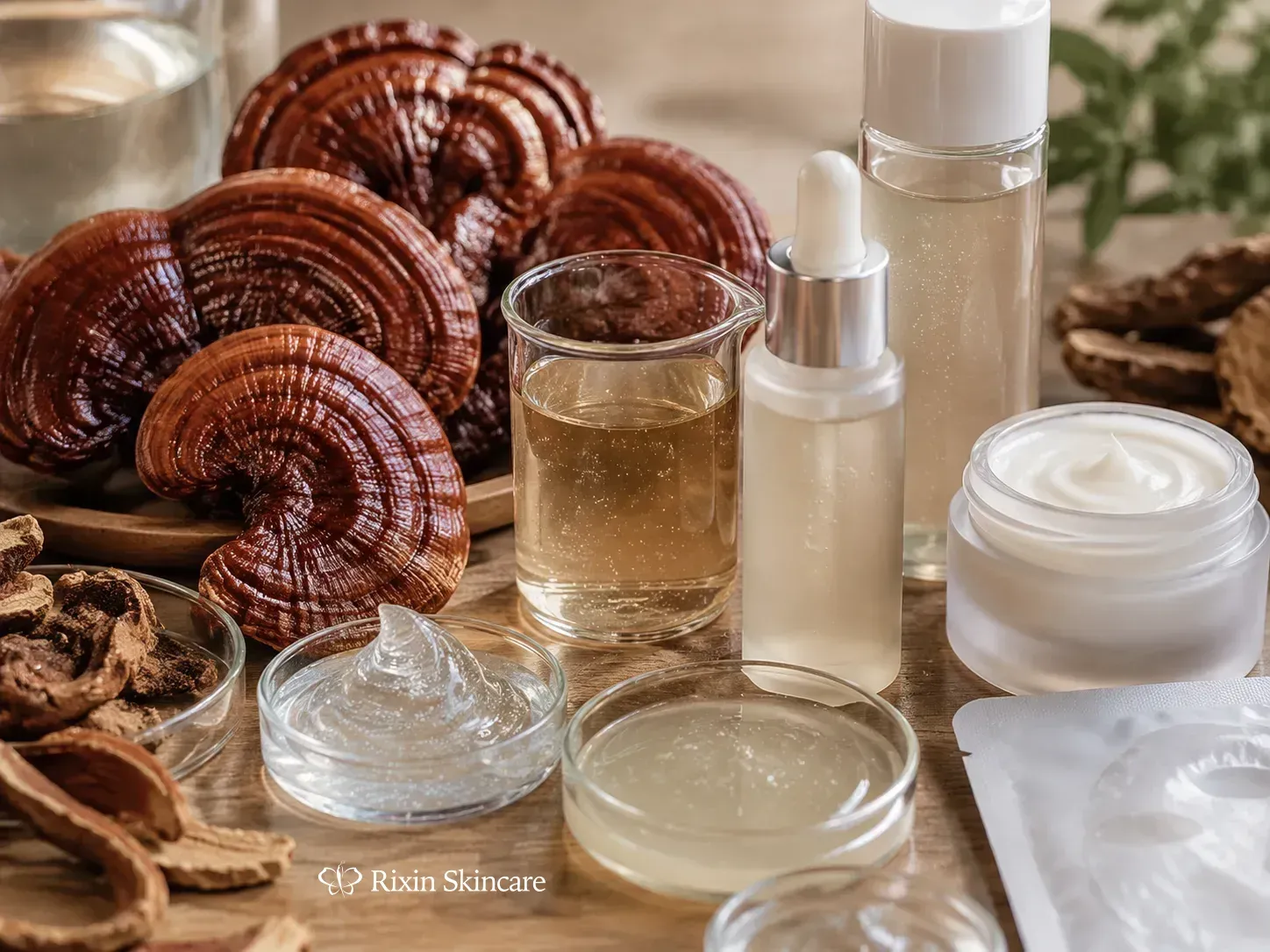
Develop a beta-glucan serum, toner, moisturizer, or mask around the exact material—not the ingredient name alone. Rixin helps brands review source, supplied form, solubility, sensory behavior, packaging, documentation, finished-product testing, and claim direction for private label or custom projects, while keeping Ganoderma beta-glucan, Ganoderma extract, and Ganoderma-derived chitosan clearly separated.
Ingredient Snapshot
Exact beta-glucan source and commercial material must be confirmed.
Ingredient Direction
Beta-glucans are a family of glucose-based polysaccharides from sources such as oats, yeast, and mushrooms. Source, linkage pattern, molecular characteristics, purity, and supplied form can change solubility, viscosity, film, and sensory behavior.
For a skincare project, confirm the commercial material before choosing the formula, product format, evidence plan, or cosmetic positioning.
Beta-glucan may fit several cosmetic directions when the material and finished formula support the intended feel and wording.
Consider it within a moisture-focused serum, toner, moisturizer, or mask system.
It may suit formulas designed for a soft, conditioned, comfortable-feeling finish.
It can complement humectants, emollients, lipids, and other skin-conditioning materials.
The selected grade may affect viscosity, slip, cushion, tack, film, and after-feel.
These are product-development directions, not universal finished-product claims. Final wording depends on the exact material, formula, evidence, intended use, and market.
Source names do not make beta-glucan materials interchangeable.
Oat and yeast grades can differ in linkage, molecular profile, solubility, dispersion, clarity, color, and supplier guidance. Confirm the actual grade rather than selecting by source name alone.
A proposal may involve isolated beta-glucan, a broader polysaccharide fraction, or a Ganoderma extract. The source story does not establish the final INCI, composition, or active-content basis.
Ganoderma-derived chitosan is a different material from Ganoderma beta-glucan. Confirm identity, composition, physical form, and evidence for the exact supplied ingredient.
Solutions, dispersions, concentrates, and blends may include carriers or preservatives. Review the complete composition and the basis used for any supplier evidence.
Use the product format to set the relevant texture, dispersion, package, and development questions.
| Product Format | Development Direction | Review First |
|---|---|---|
| Facial Serums | Lightweight hydration or conditioning | Clarity, viscosity, tack, dispersion, and dispenser |
| Toners & Essences | Low-viscosity hydration and daily comfort | Solubility, sedimentation, color, odor, and preservation |
| Moisturizers | Hydration or barrier-supporting emulsion | Emulsion fit, richness, film, and after-feel |
| Facial Masks | Hydration and comfortable skin feel | Essence structure, substrate, fill, and seal |
Keep the brief focused on the decisions that change material fit and finished-product experience.
Review the exact source, species or biomass where relevant, INCI, composition, beta-glucan basis, carrier, preservative, and supplied form.
Supplier guidance should set expectations for hydration, agglomeration, pH, temperature, shear, electrolytes, and order of addition.
Viscosity, clarity, film, tack, slip, cushion, color, and odor depend on the selected material and supporting formula system.
Evidence for one oat, yeast, mushroom, or Ganoderma material does not automatically support another grade or finished formula. Keep cosmetic claims tied to the actual project.
Start With the Exact Material
Share your proposed source, supplier material, product format, sensory target, packaging direction, market, and claim goals. Rixin can review private label, formula-adjustment, or custom-development routes. Material availability, exact identity, feasibility, evidence, claims, and market suitability require project-level review.