Gel Cleansers
Clear, translucent, or opaque gels with adjustable viscosity, foam, rinse profile, fragrance, color, and after-feel. Pumps and tubes are common packaging directions.
Facial Cleanser Development for Beauty Brands
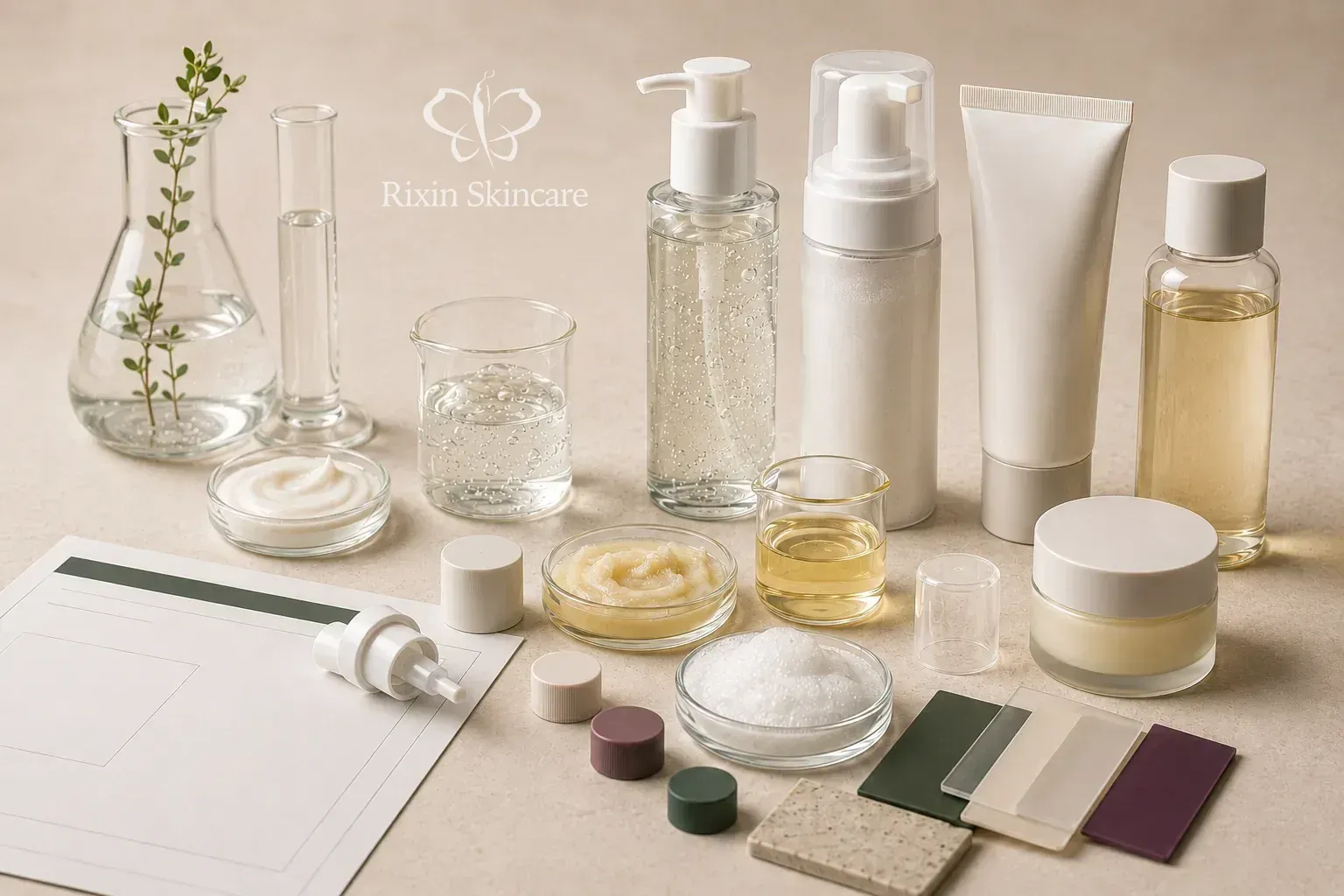
Rixin develops and manufactures private-label and custom facial cleansers for beauty brands. The formats shown are development options, not ready-to-ship inventory.
Product Formats
The format affects formula structure, sensory performance, filling, packaging, and use. The starting direction can be refined through sampling.
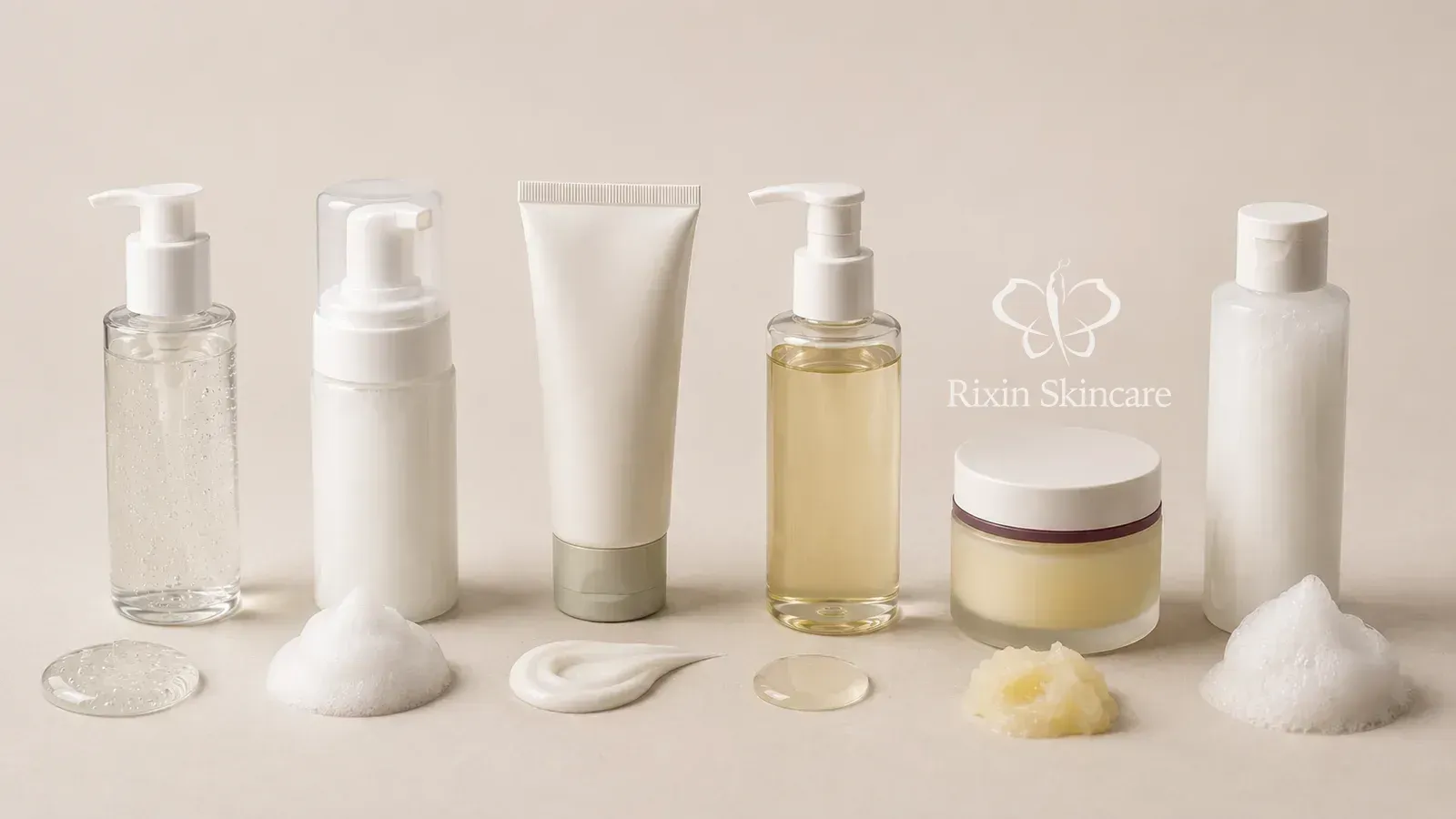
Clear, translucent, or opaque gels with adjustable viscosity, foam, rinse profile, fragrance, color, and after-feel. Pumps and tubes are common packaging directions.
Formulas designed to build lather during use. Define the required foam volume, density, cleansing direction, and rinse behavior.
Emulsion-based formats with a richer application profile. Texture, spreadability, cleansing level, rinse character, and dispensing should be assessed together.
Oil-based systems requiring review of rinse-off behavior, clarity, oxidation, leakage risk, closure performance, and transport conditions.
Semi-solid formats that soften during use. Balm structure, melt profile, jar compatibility, seal integrity, and temperature exposure can affect development.
Low-viscosity formulas dispensed as ready-made foam. Liquid properties and foaming-pump performance must be evaluated as one system.
Formula Brief
A useful brief describes how the cleanser should behave, not only its format.
These choices influence the surfactant system, pH, thickening approach, preservation, filling, packaging compatibility, and sample evaluation. Reference products can clarify the target, but the finished direction still requires project-specific review.
Ingredient Review
Projects may consider amino-acid-based cleansing systems, panthenol, PHA directions, zinc PCA, salicylic-acid-related concepts, or other cosmetic ingredients aligned with the brief.
Suitability depends on the exact material, supplier information, formula compatibility, pH, color, odor, processing, stability, target market, and proposed wording. An ingredient trend alone does not define a workable finished cleanser.
Explore Skincare Ingredient DirectionsPackaging Fit
Options may include pump bottles, foaming pumps, squeeze tubes, flip-top or disc-top bottles, balm jars, and printed cartons.
Selection depends on viscosity, product size, filling method, leakage control, closure performance, printing requirements, component minimums, and transport conditions. Foaming pumps need a compatible low-viscosity formula, while oils and balms may require additional seal and temperature review.
Review Packaging and Label Support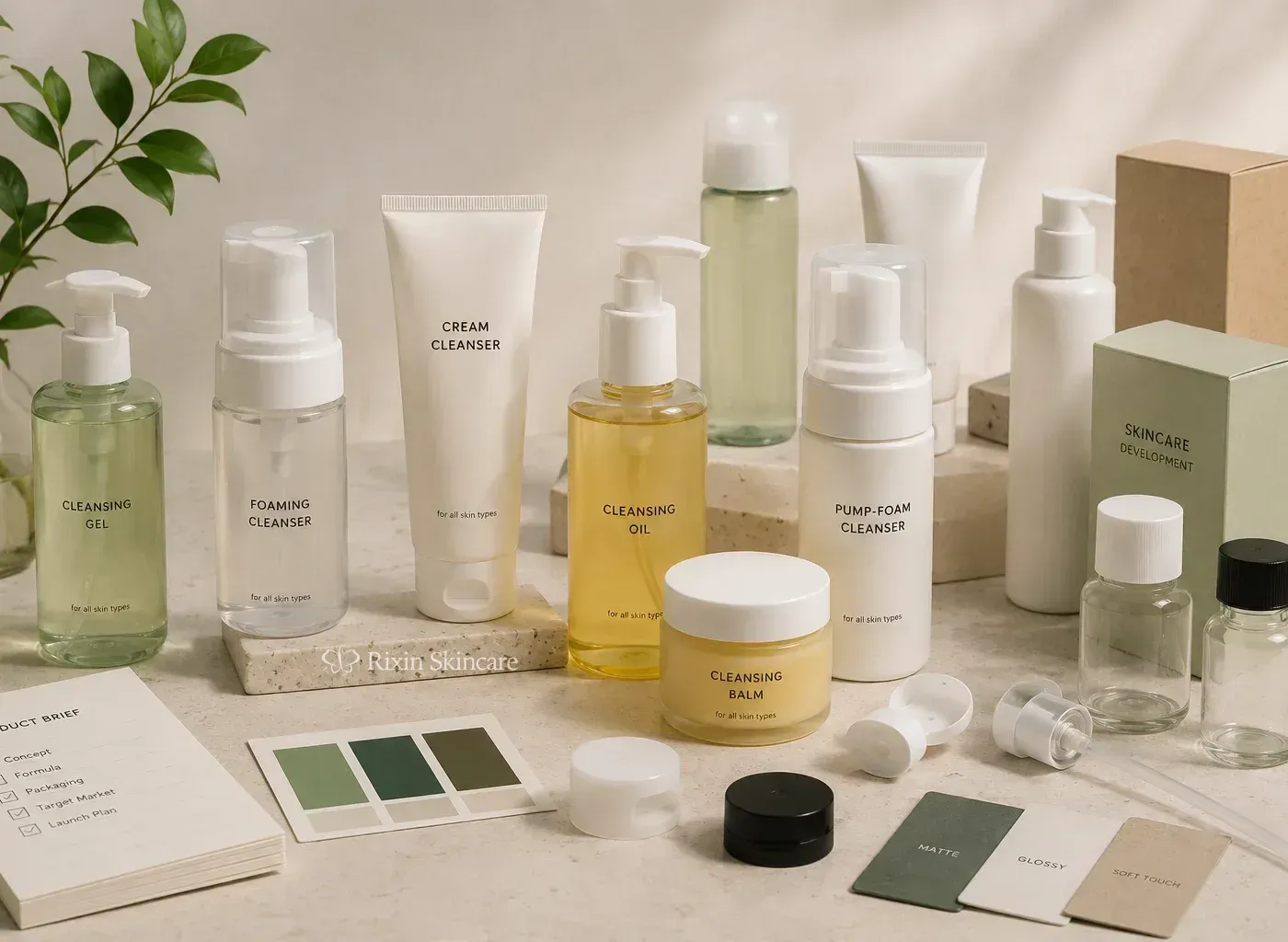
Project Route
Begin with a suitable existing formula direction and define permitted adjustments, packaging, artwork, quantity, target market, and required documentation.
Explore Private Label SkincareUse a defined brief when the cleanser needs a new or substantially adapted formula, surfactant direction, texture, foam profile, ingredient system, reference target, or packaging format.
Explore Custom Formulation & OEMA private label request may move into custom development when proposed changes materially affect formula structure, stability, processing, testing, or packaging compatibility.
Project Readiness
Depending on the project, review may include stability, microbiological assessment, packaging compatibility, dispenser or closure performance, finished-product specifications, INCI information, supporting files where applicable, and label or claim review.
Supplier information supports raw-material evaluation but does not replace finished-product assessment. Requirements and final wording depend on the actual formula, package, intended use, destination market, and agreed scope.
Review Quality, Testing & DocumentationCommercial Planning
Include:
The minimum order quantity (MOQ) starts at 2,000 units per product. Final arrangements can also depend on formula batch minimums, packaging-component minimums, printing minimums, product size, and the number of variants.
Typical production lead time is 40 days after the formula, packaging, artwork, and order details are confirmed. Formula development, sampling, pre-confirmation packaging work, international shipping, and customs clearance are outside that production period.
Buyer Questions
Yes. A reference can communicate texture, foam, rinse profile, fragrance, appearance, packaging, or positioning. It does not automatically define an identical formula or finished result.
Possible adjustments can be reviewed against the starting formula. Changes to ingredients, texture, fragrance, color, foam, pH, or packaging may require custom development.
Provide the format, target market, formula status, ingredient and sensory direction, references, packaging preference, quantity, testing needs, and launch timing.
Formula and packaging should be reviewed together. Final compatibility depends on the approved formula, viscosity, filling method, dispenser performance, seals, and project requirements.
Start With a Defined Brief
Share your target market, cleanser format, formula status, ingredient and sensory direction, packaging preference, expected quantity, documentation needs, and launch timing for an initial route review.
Request a Facial Cleanser Proposal