Ingredient directions

Ceramide Skincare Development

Ceramide Skincare Formulation and Manufacturing

Develop ceramide skincare around the exact raw material—not the ingredient name alone. Review the selected system with its supporting lipids, emulsion, texture, format, packaging, testing, and target market.
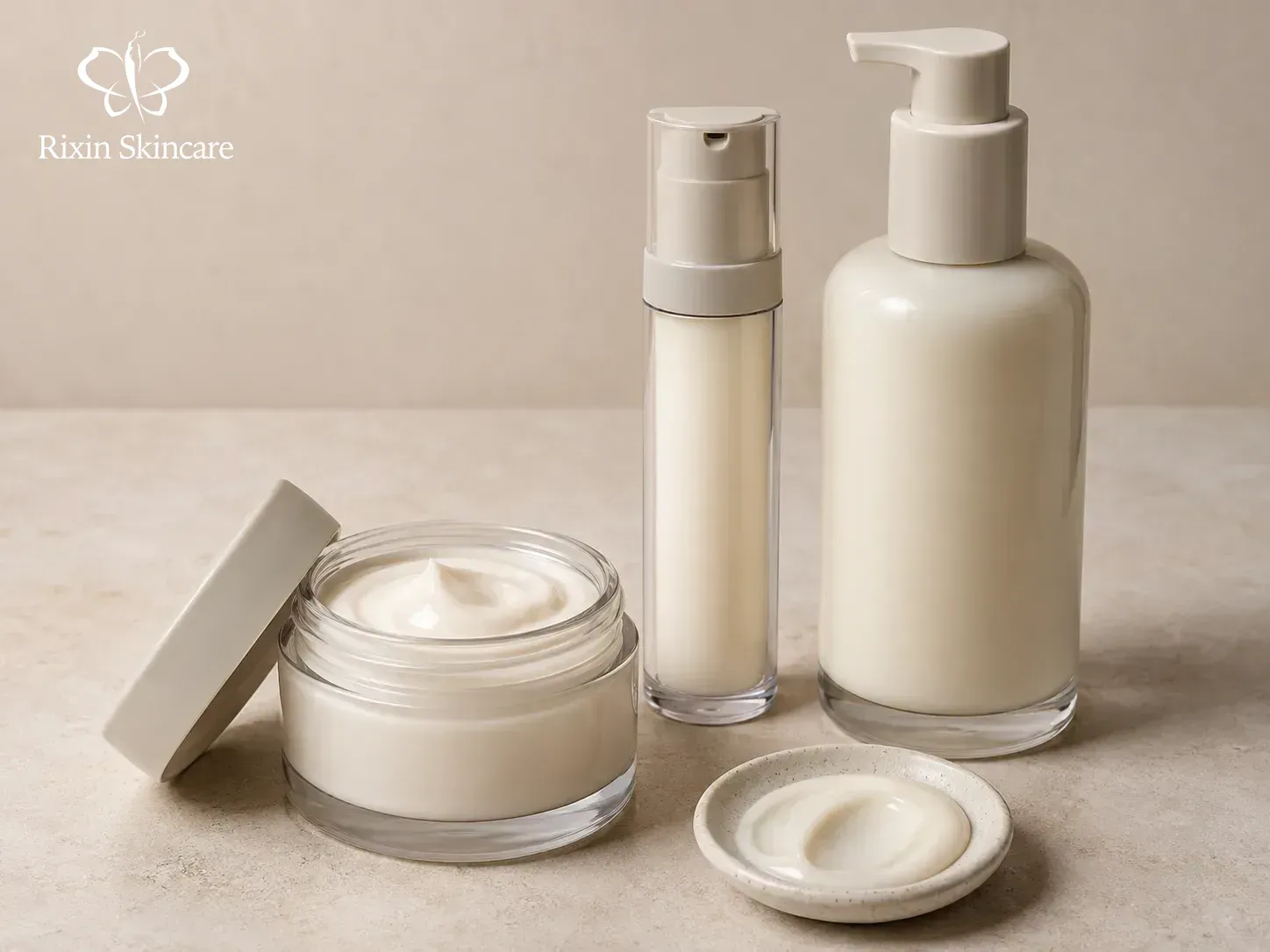
Unlabeled moisturizer, milky serum, and lotion formats with restrained cosmetic textures in a unified development composition

Ingredient Direction

What Are Ceramides?

Ceramides are lipids naturally found in the skin’s outer layer, where they form part of the structure associated with limiting moisture loss. In skincare, named ceramides and supplier-created systems may be used in hydration and moisture-barrier-supporting formulas. The exact material and composition still require confirmation.

Concept Development

Why Brands Consider Ceramide Skincare

Ceramides can support several cosmetic directions, subject to the complete formula and finished-product evidence.

Moisture-Barrier Support

Position a cosmetic product around supporting the skin’s moisture barrier without implying treatment, healing, or structural repair.

Hydration and Moisture Retention

Combine the selected ceramide system with a moisturization strategy designed to help skin retain moisture and feel less dry.

Softness and Comfort

Balance lipids, humectants, and emollients to create smoother-, softer-, and more comfortable-feeling skin concepts.

Barrier-Focused Product Systems

Extend the concept beyond one featured ingredient by reviewing texture, format, packaging, and supportable claims together.

Material Review

Confirm the Exact Ceramide Material or Supplier System

“Ceramide” may mean a single named INCI, multi-ceramide blend, dispersion, encapsulated material, or proprietary complex containing carriers and supporting ingredients. Representative names include Ceramide NP, AP, EOP, and NS, but these materials are not interchangeable.

Confirm the supplier, trade name, complete INCI composition, ceramide type, concentration basis, carrier, supplied form, specification, storage guidance, incorporation method, processing limits, and available documents. Review supplier studies and trademark conditions where relevant.

Rice, wheat, and konjac source cues shown with small neutral sample vessels for plant-derived ceramide system discussion
Plant-derived system example only; confirm the exact commercial material and origin with supplier documentation.
Cream, milky emulsion, oil phase, and clear gel samples arranged for cosmetic formula-system review

Formula System

Build the Complete Lipid and Emulsion System

A ceramide ingredient does not define the full formula. Development may also require cholesterol and fatty-acid directions, humectants, emollients, occlusives, emulsifiers, thickeners, preservation, antioxidants, and supporting ingredients.

Richness, absorption, and residue should guide the system. No universal ratio, use level, or process fits every project; decisions depend on the selected material, supplier guidance, objective, and evidence.

Format Selection

Choose the Product Format Around the Ceramide System

Moisturizers

Creams, lotions, gel creams, and richer emulsions are common routes. Review lipid phase, texture, absorption, packaging, and stability together.

Facial Serums

Milky or emulsified serums may fit when the material and carrier support the intended viscosity and finish.

Gentle Cleansers

Selected cleansing formats require separate review of surfactants, rinse-off use, deposition expectations, preservation, and claims.

System Review

Review Formula, Processing, and Packaging Together

Supplier guidance should inform phase selection, order of addition, heating, cooling, mixing, and shear. Review dispersion, recrystallization or sedimentation risk, emulsion stability, viscosity drift, and interactions with polymers, electrolytes, surfactants, preservatives, fragrance, and other actives.

Sensory review covers opacity, richness, tack, absorption, and residue. Scale-up and filling add dependencies. Assess jar, tube, pump, airless, or bottle options for dose, sealing, leakage, transport, and formula compatibility through formula development and packaging review .

Evidence and Market Review

Separate Ingredient Science from Finished-Product Evidence

Raw-Material Evidence

Supplier documents can support identity, composition, specification, handling, and technical review. They do not prove finished-product performance.

Finished-Product Evidence

The project may require stability, package compatibility, microbiological quality, preservative-efficacy work where applicable, safety assessment, specifications, and claim substantiation.

Market-Facing Wording

Claims should reflect the finished product and evidence. Prefer qualified cosmetic wording such as “supports the skin’s moisture barrier,” “helps skin retain moisture,” “hydrating,” or “skin-conditioning.” Do not convert medical research or supplier data into treatment or disease claims.

Review requirements through Quality, Testing & Documentation .

Project Direction

Choose the Development Route from the Product Brief

Private Label

Private label may fit when an existing formula already uses a suitable ceramide system and the main decisions involve formula availability, packaging, label, quantity, and permitted customization.

Formula Adjustment

Adjustment may fit when changing texture, lipid balance, supporting ingredients, format, packaging, or positioning. The extent of change determines development and testing scope.

Custom Formulation

Custom formulation starts with a defined ceramide direction, product format, sensory target, supporting system, packaging, evidence needs, and target market.

Include the target product, SKU count, reference texture, selected supplier material when available, supporting ingredients, target market, packaging, quantity per SKU, testing needs, and launch timing.

  • Target product and SKU count
  • Reference texture
  • Selected supplier material when available
  • Supporting ingredients
  • Target market and packaging
  • Quantity per SKU
  • Testing needs and launch timing

Frequently Asked Questions

Ceramide Skincare Development FAQ

Is Ceramide NP the same as a ceramide complex?

No. Ceramide NP is a named INCI. A commercial complex may include several ceramides, carriers, cholesterol, fatty acids, or other components.

Do ceramides always need cholesterol and fatty acids?

No universal rule applies. The system depends on the material, format, supplier guidance, sensory target, and evidence plan.

Can ceramides be used in a lightweight serum?

They may fit compatible milky or emulsified systems, depending on supplied form, carrier, dispersibility, viscosity, and finish.

Are plant ceramides and named cosmetic ceramides the same?

Not automatically. Verify the exact INCI, origin, composition, and manufacturing route.

What should I provide for a ceramide project?

Share the format, market, texture, selected material, supporting ingredients, packaging, quantity, testing needs, and timing.

Define the System

Discuss Your Ceramide Skincare Project

Share your target product, market, ceramide or supplier reference, texture, supporting ingredients, packaging, quantity, evidence needs, and launch timing. We can review the development route and information needed before sampling or quotation.