Ingredient directions

Peptide Ingredient-Led Skincare Development

Peptide Skincare Formulation and Manufacturing

Develop private label or custom peptide skincare around a defined cosmetic direction. Peptides are short amino-acid chains, not one ingredient or one benefit. The project depends on the peptide, carrier, formula, package, evidence, and market.
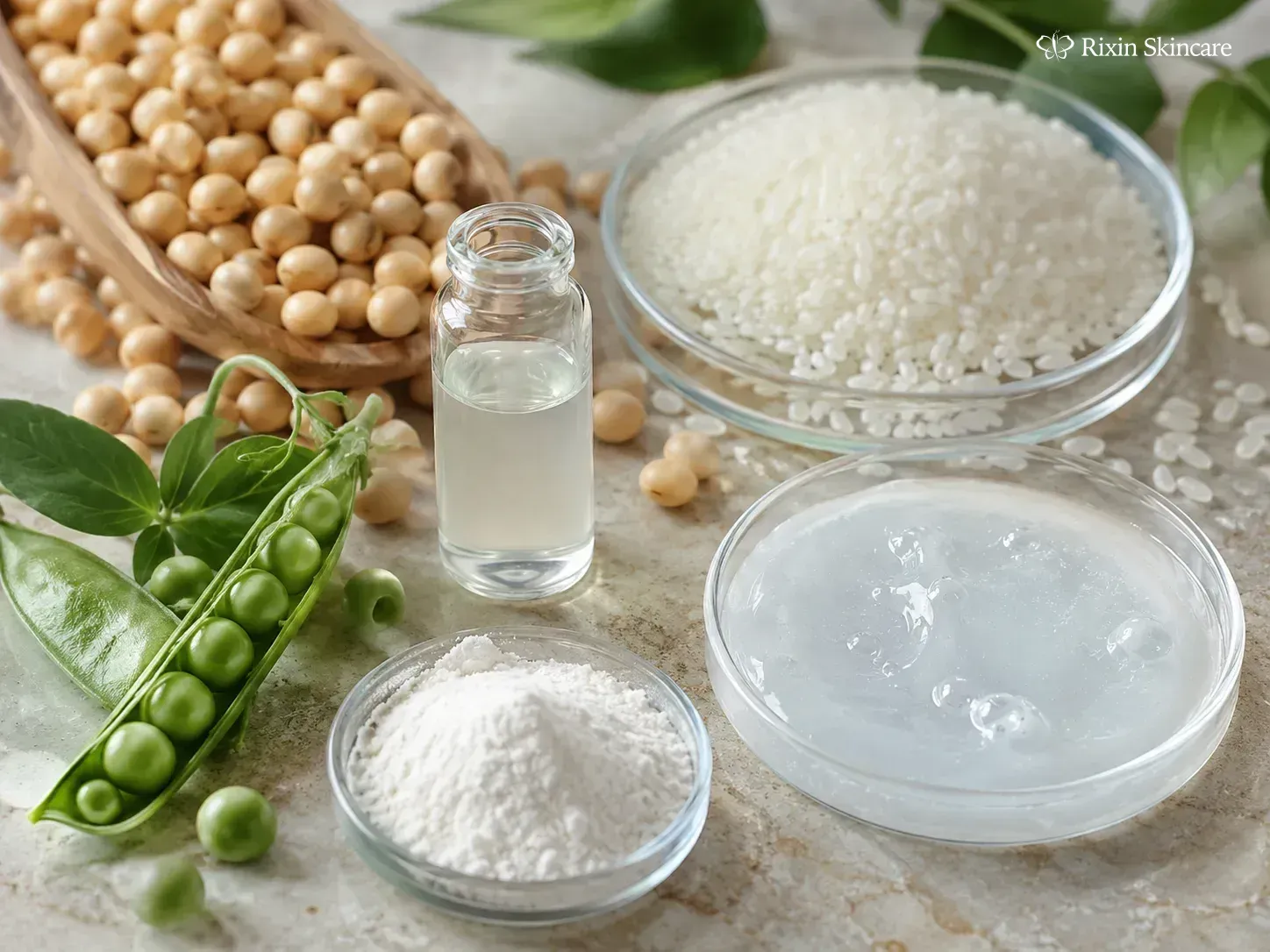
Soybeans, rice grains, pea pods, fine white powder, clear serum gel, and a sample vial arranged for cosmetic ingredient development

Ingredient Direction

What Are Peptides in Skincare?

Peptides are short chains of amino acids, the same building blocks found in larger proteins. In cosmetics, a peptide may be selected because its sequence, modification, or complex supports a particular appearance-focused direction.

“Peptides” is not a final INCI declaration. A commercial material may contain one or several peptides plus water, glycerin, preservatives, solvents, or other carriers. Its sequence, physical form, and production route can affect formulation.

Peptides are not collagen, one universal plant extract, or a guarantee of the same result. Each material needs its own identity, composition, documentation, and finished-product review.

Cosmetic Directions

What Can Peptide Skincare Products Be Designed to Support?

Peptide-led products can support different cosmetic directions. Final wording should follow the system, formula, evidence, and target market.

Smoother-Looking Fine Lines

Signal-peptide and expression-line concepts may suit serums, eye-area products, and moisturizers designed to improve the look of fine lines.

Firmer-Looking Skin

Selected signal or carrier peptide systems may suit firming and elasticity-focused positioning when the finished formula and evidence support it.

Hydration and Softness

Peptides can be paired with humectants and conditioning ingredients in serums, emulsions, and masks for softer, more comfortable-looking skin.

Refined Texture

A peptide system may support a smoother-looking, more supple, or well-conditioned skin concept.

Expression-Line Appearance

Certain neurotransmitter-affecting peptides may suit expression-line concepts. Wording should avoid injection comparisons or muscle-relaxation claims.

Peptide Categories

Main Types of Cosmetic Peptides

Signal Peptides

Signal peptides mimic selected peptide fragments associated with skin-supporting signaling processes. Examples include Palmitoyl Pentapeptide-4, Palmitoyl Tripeptide-1, Palmitoyl Tripeptide-5, and Tripeptide-10 Citrulline. They may suit smoother, firmer, or more elastic-looking skin concepts. Copy should stay focused on appearance.

Carrier Peptides

Carrier peptides bind or transport trace elements within a complex. Copper Tripeptide-1 is a representative example for serum or moisturizer concepts focused on conditioned, smoother, or firmer-looking skin. Its blue tone may affect formula color and presentation.

Neurotransmitter-Affecting Peptides

These peptides are studied for interactions connected with neurotransmitter-release pathways. Examples include Acetyl Hexapeptide-8, Pentapeptide-18, and Dipeptide Diaminobutyroyl Benzylamide Diacetate. Positioning may focus on softening the look of expression lines without treatment comparisons.

Enzyme-Inhibiting and Specialized Systems

This group may include peptide hydrolysates, fermentation-derived materials, supplier complexes, or peptides studied for specialized pathways. Identity, composition, and evidence vary. A marketing name may not match the final INCI, and supplier information does not prove finished-product claims.

Representative Directions

Representative Peptides for Product Development

  • Palmitoyl Pentapeptide-4: A signal-peptide direction for fine-line and firming concepts. Confirm the material, carrier, and evidence.
  • Palmitoyl Tripeptide-1: A signal peptide for smoother and firmer-looking skin concepts, sometimes supplied within a broader system.
  • Palmitoyl Tripeptide-5: A signal-peptide direction for firming and elasticity-focused products. Confirm composition and claim support.
  • Copper Tripeptide-1: A carrier peptide suited to distinctive serum or moisturizer concepts. Formula color, compatibility, stability, and wording require review.
  • Acetyl Hexapeptide-8: A neurotransmitter-affecting peptide associated with expression-line and eye-area concepts. Avoid injection or treatment comparisons.
  • Tripeptide-10 Citrulline: A specialized signal-peptide direction for texture and firming concepts. Confirm documentation and availability.

A multi-peptide formula is not automatically superior. Each material may add a different carrier, preservative, solvent, or supporting ingredient, so the total system requires review.

Source and Production

Not All Peptides Come from the Same Source

Many defined cosmetic peptides are synthetic or biomimetic sequences. Some are modified with a fatty-acid group or supplied in a pre-dispersed blend.

Metal-complex peptides include Copper Tripeptide-1. Other materials may use fermentation or recombinant biotechnology. Supplier files should confirm the production route, composition, proposed INCI, and handling guidance.

Protein hydrolysates and peptide fractions may come from soy, rice, pea, wheat, marine, or other proteins. These sources do not represent every peptide, and a plant hydrolysate is not equivalent to a defined synthetic signal peptide.

Product-Format Selection

Match the Peptide System to the Product Format

Clear serum bottle, cream jar, sheet-mask sachet, and fine white powder arranged for skincare product-format review

Facial serums and ampoules

can suit lightweight peptide concepts. Review clarity, viscosity, skin feel, supporting ingredients, dose control, and pump, dropper, or airless compatibility.

Moisturizers

and eye-area concepts require review of the emulsion, texture, intended use area, package dose, and appearance-focused wording.

Facial masks

, hydrogel concepts, and essence formats may be considered when the selected peptide system suits the formula. Essence loading, pouch materials, stability, and sealing should be assessed together.

Material Review

How to Choose the Right Peptide System

Start with the intended outcome: fine-line appearance, firming, hydration, expression lines, eye-area care, or a broader concept.

Confirm the exact peptide, single- or multi-peptide direction, production route, full INCI, carrier, and supplier evidence. A trade name may describe a blend rather than one peptide.

The material must also fit the product format, market, package, budget, and development route. Confirm documentation and technical suitability before approving it for the project.

Fine white powder, clear solution, milky liquid, serum gel, and a pipette arranged for cosmetic raw-material review

System Review

Review the Formula and Package as One System

A peptide should be evaluated within the complete formula . Review may cover solubility, addition phase, processing temperature, pH environment, carrier compatibility, preservation, color, clarity, viscosity, and skin feel.

Packaging also matters. Pump, airless, dropper, tube, jar, or sachet formats can be discussed, but none suits every product. Light and oxygen exposure, repeated opening, dosing, leakage control, and formula–component interaction affect selection. See Packaging and Label Design .

Evidence and Market Review

Separate Raw-Material Evidence from Finished-Product Claims

Raw-material review may cover specification, certificate of analysis, safety information, proposed INCI, composition, storage, processing guidance, supplier studies, and trademark conditions.

Finished-product requirements are separate and may include stability, packaging compatibility, microbiological quality, preservative efficacy where applicable, safety files, substantiation, and label review. See Quality, Testing & Documentation .

Supplier evidence does not prove finished-product performance. Claims should follow the exact formula, substantiation, and target market.

Project Direction

Choose the Development Route from the Product Brief

Private Label Skincare

may fit when an existing formula already contains a suitable peptide system and the main decisions involve packaging, labeling, and available customization.

Formula Adjustment

may suit a different peptide direction, texture, supporting ingredient system, or package. The scale of change determines the additional review or testing required.

Custom Formulation and OEM

starts with a defined peptide direction, product format, texture, packaging, target market, and evidence requirements.

For an initial review, provide:

  • Product category and reference product
  • Intended appearance-focused positioning
  • Exact peptide or supplier material, when specified
  • Preferred texture and product format
  • Target market and packaging direction
  • Quantity per SKU
  • Testing and documentation needs
  • Target launch timing

Use Project Requirements to prepare the brief.

Frequently Asked Questions

Frequently Asked Questions

What are peptides made from?

Peptides are made from amino acids linked in a specific sequence. Commercial cosmetic materials may also contain water, glycerin, solvents, preservatives, or other carriers.

Are plant peptides and synthetic peptides the same?

No. A plant-protein hydrolysate or peptide fraction differs from a defined synthetic or biomimetic sequence. Review the INCI, composition, production route, and evidence separately.

Which peptide is best for a firming serum?

There is no universal best peptide. The choice depends on positioning, supplier material, formula, texture, packaging, evidence, target market, and budget.

Can several peptides be combined in one product?

A multi-peptide direction can be evaluated, but compatibility should not be assumed. The carriers, processing guidance, preservation system, packaging, and stability plan require review.

What information is needed for a peptide skincare quote?

Provide the product format, intended positioning, selected material if known, reference product, texture, market, packaging, quantity, testing needs, and launch timing.

Start With the Product Brief

Start with the Peptide Direction and Product Brief

Share the peptide direction, format, market, texture, packaging, quantity, and documentation needs. Rixin can review whether private label, formula adjustment, or custom formulation is the suitable starting route.

This page is for B2B cosmetic development. Peptide identity, INCI, formulation suitability, claims, and market fit should be reviewed for the exact material, formula, package, and evidence.