On this page
Packaging decoration can change a skincare manufacturing quote because bottle printing, labels, finishes, and cartons often have separate setup work, supplier minimums, samples, approvals, and timing. For a skincare brand owner preparing a quote, the practical task is to define each decorated component and separate what the buyer provides from what the supplier must confirm.
A decoration method name alone is not enough. The quotation should show the component, artwork version, quantity basis, supplier responsibility, approval evidence, and any TBC items—details still to be confirmed.
Why Decoration Changes a Skincare Quote
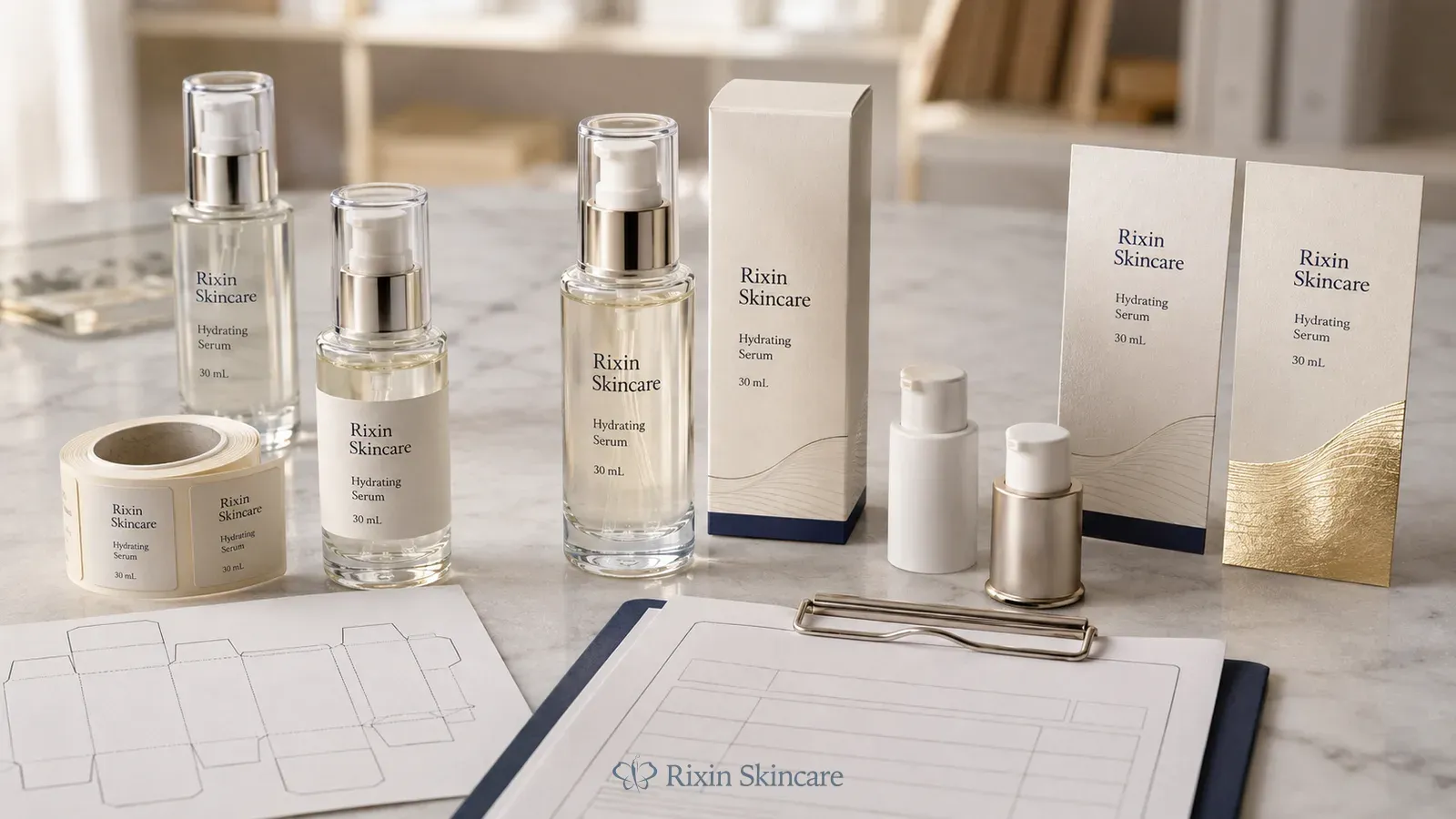
Consider a 30 mL serum with a clear bottle, pump and cap, front label, and folding carton. The first direction uses a one-color label, a plain cap, and a standard printed carton. The revised direction uses direct bottle printing, a custom-colored cap, and a foil accent on the carton.
The formula and fill quantity remain the same, but the packaging quotation may change. The revised scope can create separate lines for bottle-printing setup and production, the custom cap or finish, and the carton foil setup and carton production.
Use the quote-change guide when the decoration scope changes after a quotation has been issued.
Start With a Complete Decoration Scope
A visual mockup shows design intent, but it may not show how the package will be produced. Each decoration choice must match the selected component, material, artwork, supplier, and order quantity.
Use this scope framework:
Decorated item
+ material and surface
+ decoration location
+ method or finish choice
+ artwork and color reference
+ supplier
+ quantity and minimum
+ setup and sample
+ approval standard
= quotation-ready decoration scope
This is a scope checklist, not a pricing formula.
Buyer provides:
- selected component and package version;
- final or current artwork filename and version;
- quantity for each color or package version;
- color, finish, and placement references;
- target market and approval owner.
Supplier confirms:
- whether the selected method suits the component and surface;
- responsible supplier and available process;
- supplier minimum and quantity basis;
- setup or tooling where applicable;
- required proof or physical sample;
- quotation line, status, and timing.
Use the current project requirements to organize these inputs before requesting or approving a quote.
Quote Each Decorated Packaging Item Separately
Primary packaging contains or dispenses the formula, such as a bottle, jar, tube, pump, cap, collar, or applicator. A self-adhesive label is a separate printed item applied to the package. A carton, sleeve, or insert is secondary packaging.
Each item may use a different supplier, minimum, approval file, and delivery date. Their appearance should be coordinated, but the quotation lines should remain traceable.
Bottle printing, a custom cap, a label, and a printed carton should not be combined into one unexplained decoration total. The packaging and label design overview explains how components, artwork, decoration, and package approval fit into the wider packaging system.
Compare Decoration Methods and Quote Requirements
The same visual effect may be produced through different methods. The exact requirement depends on the component and supplier, and the methods below are possible directions rather than confirmed Rixin capabilities.
| Decoration method or finish choice | Scope to confirm | Quote effect to review | Approval evidence |
|---|---|---|---|
| Direct printing | Component, material, shape, print area, colors, artwork, supplier | Setup, supplier minimum, printing line, timing | Artwork proof, color reference, decorated sample where required |
| Self-adhesive label | Label material, size, shape, adhesive, finish, print, application | Label minimum, die where applicable, application work | Dieline, artwork proof, physical or applied sample where required |
| Component color or surface finish | Component, color or finish reference, coverage, supplier | Component treatment, minimum, sample, handling | Approved color or finish reference and production basis |
| Foil or accent finish | Exact component or carton area, finish reference, artwork, supplier | Setup, die or tooling where applicable, supplier minimum | Approved artwork and finish sample where required |
| Carton, sleeve, or insert | Structure, material, dieline, print, finish, pack-out | Printing setup, finish, assembly or insertion | Dieline, artwork proof, structural or printed sample where required |
| Multiple decorated items | Bottle, pump, cap, label, carton, and responsibilities | Separate quotation lines, minimums, deliveries, and approval dates | Component-by-component approval record |
Open items should remain TBC until the responsible supplier confirms them.
Check Decoration Minimums and Split Versions
The finished-product filling MOQ may differ from the component, label, carton, or decoration supplier minimum. Confirm the quantity for every decorated item and every artwork, color, or finish version.
Several colors or package versions can split the order across separate decoration runs. Ask whether each version meets the relevant supplier minimum and how extra components allowed for normal production loss, shortages, or surplus decorated stock will be handled where relevant.
Use the MOQ and lead-time guidance for the project-level minimum and timing framework.
Separate Setup From Per-Unit Decoration Work
One-time preparation and decoration work applied during the production run should be distinguishable in the quote.
Preparation may include artwork adaptation, a dieline—the flat technical layout used for a label or carton—print-area preparation, a screen, plate, die, fixture, or other tooling where applicable, and a digital proof or physical sample.
The production line may then show the decoration work applied to each component or batch. Ask whether preparation is included, separately quoted, optional, excluded, or TBC, and whether any item must be revised for a later artwork version. The quotation-scope guide explains these statuses within the wider skincare manufacturing cost and quotation guide.
Approve the Production Basis, Not Only the Mockup
Approval should identify the final artwork filename and version, exact component, decoration location, print area, color or finish reference, and responsible supplier.
A mockup, artwork proof, physical component sample, decorated sample, and production approval are different stages. A proof is a review version used to check artwork, layout, color direction, or another agreed detail before production.
Where relevant, confirm placement, the alignment of the printed design, legibility, and practical tolerances—the agreed acceptable variation in position, color, or finish.
Appearance approval does not prove formula compatibility or transport performance. It also does not replace target-market, label, testing, or document review. Use the quality, testing, and documentation process for those separate requirements.
Keep a Packaging Decoration Scope Record
Record the current commercial and approval basis:
Component and material
Decoration location and method or finish choice
Artwork filename and version
Dieline or print-area reference
Color or finish reference
Supplier and responsibility
Order quantity and supplier minimum
Setup, tooling, proof, and sample status
Quote line and inclusion status
Approval owner, date, and open issue
Approve the decoration portion only when this record matches the current quotation and approval files. This checklist helps buyers avoid approving an incomplete decoration scope; it is not a universal legal rule.