On this page
Skin flooding is usually described as a hydration-focused routine that layers lighter, water-based skincare before a moisturizer.
For a skincare brand, however, the more useful question is not how many products a consumer can layer.
It is:
Does skin flooding create a real product-development opportunity, and if so, should the brand develop one hydration hero product or a coordinated system of several SKUs?
That changes the discussion from a social-media routine into a product architecture decision.
A skin flooding concept can potentially involve:
toner or essence → serum → moisturizer
But those products should not exist merely to increase the number of steps.
Each SKU needs a distinct role, texture, use experience, and commercial reason to exist.
For the broader framework used to decide whether a trend is worth developing at all, see How to Evaluate Skincare Trends for Product Development.
What Does Skin Flooding Mean for a Skincare Brand?
At product-development level, skin flooding is less about one specific formula and more about how several hydration-oriented formats work together.
A brand may interpret the trend in several ways:
- one lightweight hydration hero product;
- a toner or essence plus serum;
- a serum plus moisturizer;
- a three-step hydration system;
- or an existing product line repositioned around clearer hydration roles.
The trend does not automatically require a larger collection. Start with the main hydration product, then ask whether another step adds a distinct texture or layering role. If the extra SKU simply repeats the same use experience, one clear hero product may be a better starting point. The detailed decisions about formulas, packages, and production follow from that choice.
Start With the Hydration Sequence, Not an Ingredient List
One common mistake is to start a skin flooding project by listing popular hydration ingredients.
That is too early.
First define what each hydration step is supposed to do.
A simple concept might be:
| Step | Product role | Typical development direction |
|---|---|---|
| 1 | Lightweight preparation | Toner, essence, or mist with fast spread and low residue |
| 2 | Main hydration treatment | Serum with a more noticeable hydration-focused texture or sensory identity |
| 3 | Finishing layer | Moisturizer that provides a more complete, cushioning finish |
This is only one possible structure.
A brand could use two products, or make one product carry most of the concept.
The key is to define the job of each Skin Flooding step before deciding which ingredients appear in it.
Decide Whether Skin Flooding Needs One Product or Several
The number of SKUs should follow the hydration concept, not the trend name.
One hydration hero
One product may be enough when a lightweight essence, layerable serum, or finishing moisturizer can communicate the main idea clearly without a full routine.
A coordinated pair
Two products can make sense when each step has a visibly different layering role, such as toner or essence plus moisturizer, essence plus serum, or serum plus moisturizer. The pair should not feel like two versions of the same product.
A three-step hydration system
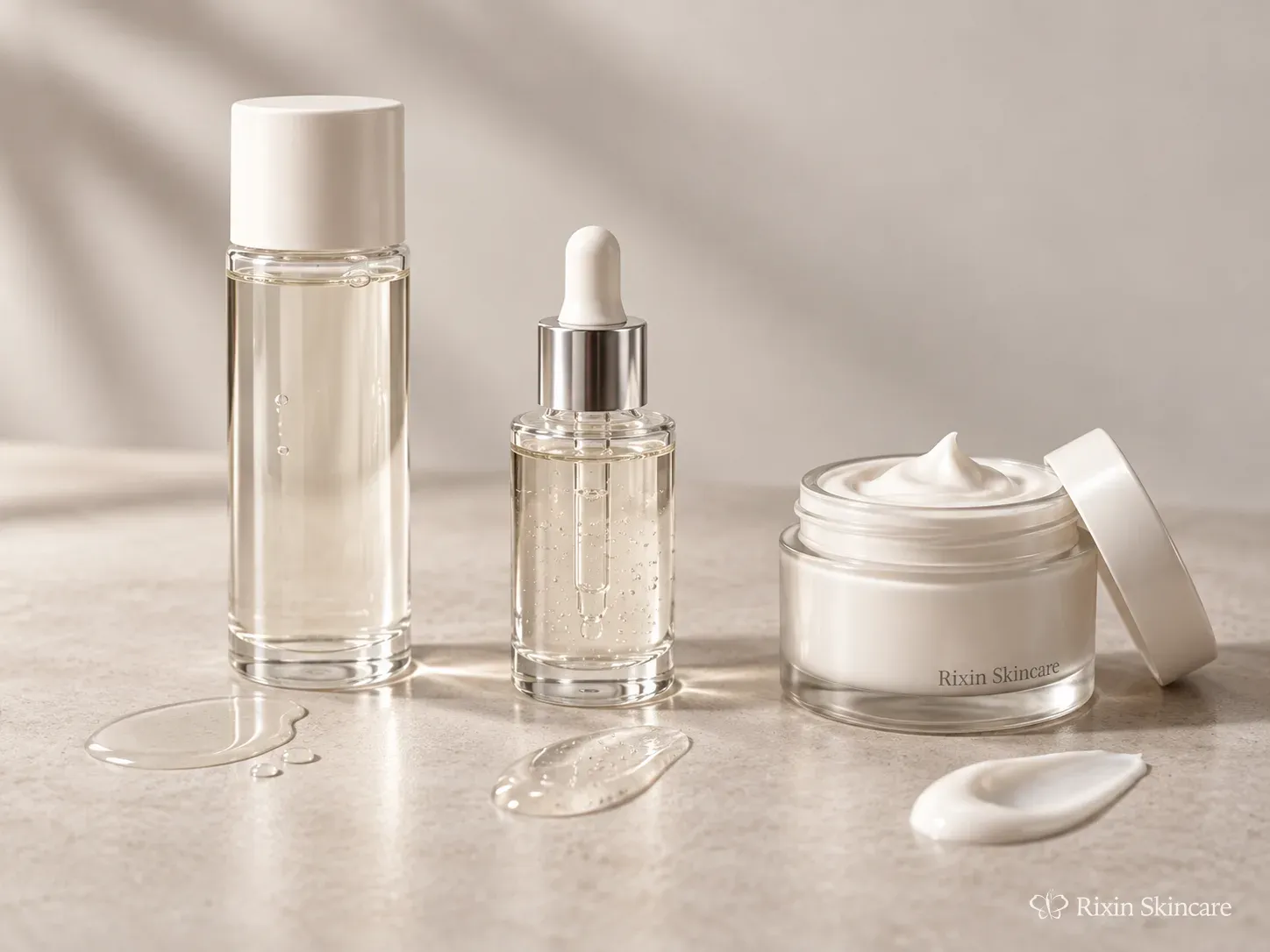
A toner or essence, serum, and moisturizer can form a coherent system when each has a distinct place in the sequence. Review format, viscosity, absorption, finish, packaging, ingredient emphasis, and routine role, while recognizing that each SKU adds formula, package, sampling, quantity, and inventory decisions.
For the wider manufacturing consequences of adding SKUs, see How SKU Count Affects a Skincare Manufacturing Budget.
Even in a multi-product launch, one SKU can anchor the concept—for example, a hero serum with supporting essence and finishing moisturizer. That anchor helps test whether the full system is necessary; supporting steps should be added only when they contribute a distinct layering role.
Example: keep the serum or add an essence? A brand already has a light hydration serum. If a proposed essence looks and feels almost the same, adding it may only create another purchase and inventory task. If the essence provides a clearly lighter first layer and a useful transition into the serum, a two-step offer may make sense. That is a decision about the layering experience, not proof that two products hydrate better than one.
Give Each Hydration Step a Distinct Role
A Skin Flooding system works better when every product contributes something different to the layering experience.
Toner or essence: the lightweight first layer
The first product usually needs to feel lighter than the products that follow.
Possible directions include:
- watery toner;
- lightly viscous toner;
- facial essence;
- lightweight mist;
- or another low-residue liquid format.
The product-development brief should define:
- how quickly it spreads;
- whether it feels watery or cushioned;
- how much residue is acceptable;
- whether it is poured, pumped, sprayed, or applied another way;
- and how it should feel underneath the next product.
Rixin’s Toner & Essence development page covers the format, sensory, packaging, and application decisions in more detail.
Serum: the central hydration step
In many Skin Flooding concepts, the serum can carry the strongest product identity because it sits between the light first layer and the moisturizer.
The serum brief may need to define:
- water-based, gel, or milky structure;
- light or more cushioning viscosity;
- absorption speed;
- tackiness;
- finish;
- compatibility with the toner or essence underneath;
- and how it behaves under moisturizer.
A hydration-focused serum does not need to feel heavy.
If the system depends on layering, a product that pills, remains excessively tacky, or creates an unpleasant combined film can weaken the whole routine experience.
See Facial Serum Manufacturing for deeper serum-format and packaging decisions.
Moisturizer: the finishing layer
The moisturizer should complete the Skin Flooding sequence rather than simply repeat the serum in a thicker format.
The brand may choose:
- gel cream;
- light emulsion;
- daily cream;
- or richer cream direction,
depending on the intended customer and positioning.
The development brief should consider how the moisturizer feels after the earlier hydration layers are already on the skin.
A moisturizer that feels appropriate by itself may feel very different when applied over a toner and serum.
See Facial Moisturizer Manufacturing for deeper format and texture planning.
Texture Progression Matters More Than Making Every Product Richer
A multi-product Skin Flooding concept can become unpleasant if every step is designed to feel highly viscous, rich, or film-forming.
The products need to work as a sequence.
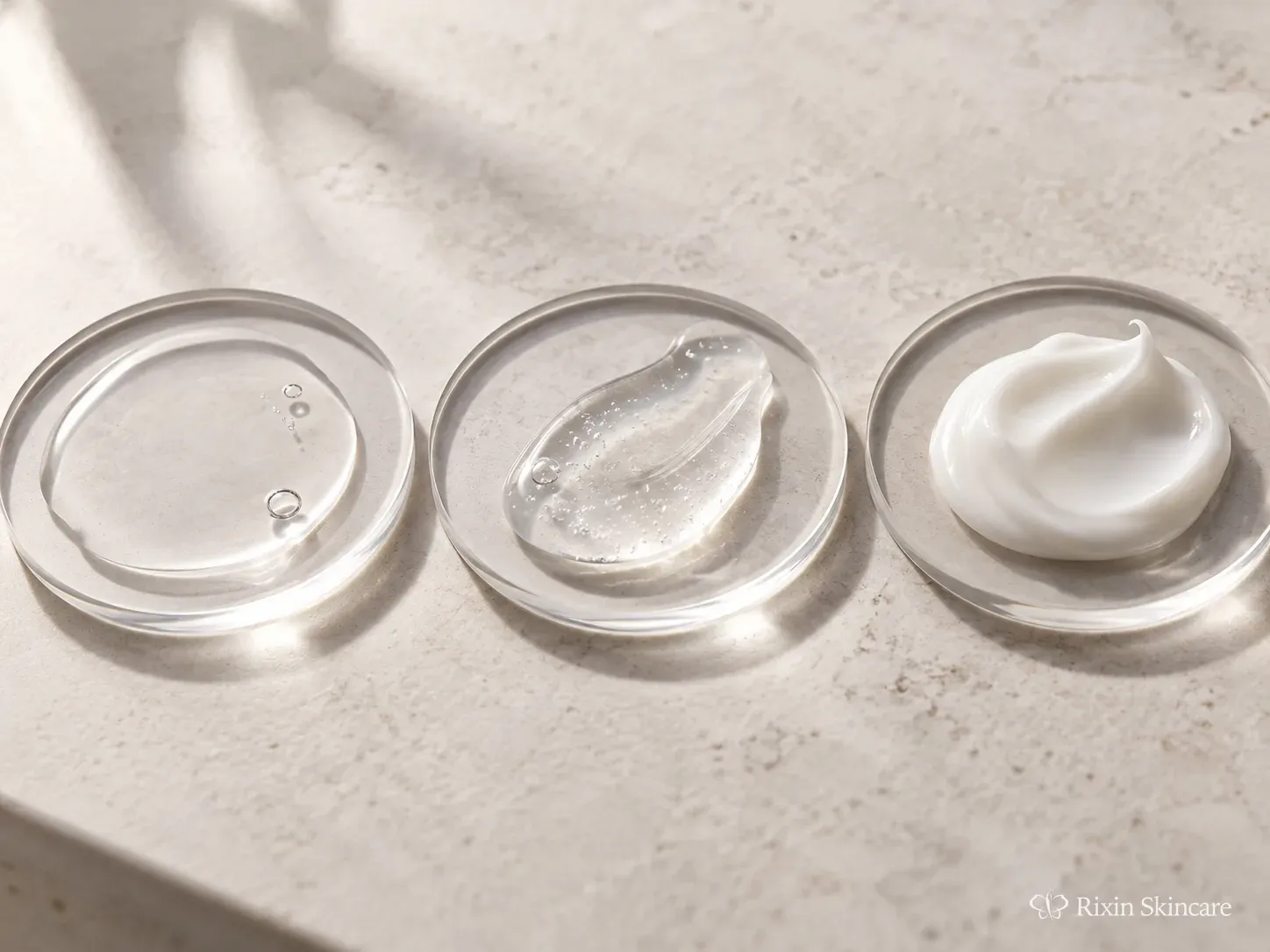
A practical texture progression could be:
watery or fluid → lightly viscous or gel-like → cushioning cream
That does not mean every Skin Flooding system must follow the same structure.
The important development question is:
Does each successive layer feel intentionally different while remaining compatible with the previous one?
During product development, review:
- spreadability;
- absorption;
- tackiness;
- residue;
- pilling;
- slip;
- dry-down;
- and the combined finish after multiple products are applied.
These are particularly important in a trend built around repeated layering.
Avoid Unnecessary Ingredient Duplication
Skin Flooding does not require the same headline ingredient or positioning across every SKU. Overlap can be intentional, but each product should have a reason for its ingredient emphasis, format fit, and claim direction. Sensory progression may provide more useful differentiation than repeating a popular ingredient.
Supplier information or ingredient popularity is not finished-product proof.
If the project starts from a particular ingredient direction, use the Rixin ingredient library to review ingredient-specific development considerations separately.
Design the Products to Be Layered Together
This is one of the most important differences between a Skin Flooding product system and several unrelated hydration products.
The formulas need to be reviewed as a sequence. For the broader planning framework, see plan a skincare routine as a product system.
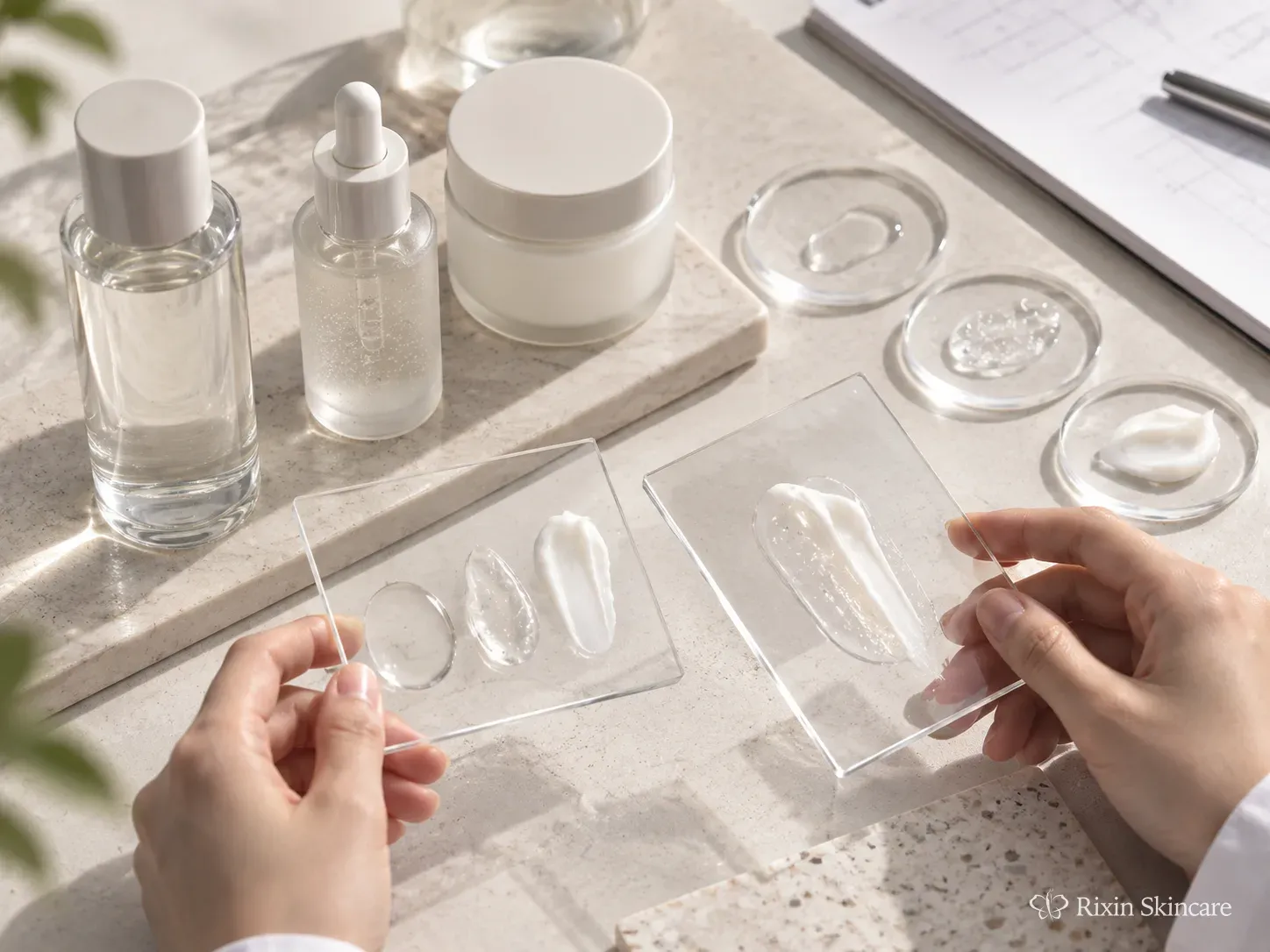
Potential interaction questions include:
- Does the toner leave enough residue to affect serum spread?
- Does the serum become tackier over the toner?
- Does the moisturizer roll or pill over the earlier products?
- Does the combined routine feel too heavy?
- Does fragrance become excessive when several products are layered?
- Do several products create the same sensory effect?
- Does the routine still make sense if the customer uses only two of the products?
The goal is not to prove that more layers are better.
It is to make sure that, if the brand chooses a Skin Flooding system, the products are intentionally designed to work together.
Packaging Should Support Each Layer
Packaging does not need to be identical across the system. A toner or essence may need a pour, pump, or mist; a serum may need controlled dispensing; and a moisturizer may require a jar, tube, pump, or airless format. The Skin Flooding-specific question is whether each package supports its layering role without compromising formula-package compatibility.
Do Not Turn “Skin Flooding” Into an Unsupported Performance Claim
Skin Flooding is a trend and routine concept; it does not prove that three products hydrate better than one, that repeated application guarantees a result, or that an ingredient combination will deliver a specific finished-product outcome. Final positioning should match the formula, supporting evidence, target market, and claim review.
Choose the Development Route Based on System Complexity
A Skin Flooding concept may use existing formulas when they already match the required formats, textures, and layering roles. Custom development becomes more relevant when the system depends on deliberate texture progression, substantially different formula structures, tighter sensory targets, or unusual package-formula interaction.
The route should follow the confirmed brief rather than the trend name. See Private Label Skincare and Custom Formulation & OEM.
Sample the Products as a Layering Sequence
Check suitability before using development samples on people. A competent technical or safety reviewer should first confirm that each sample and the planned combined-use method are appropriate for the intended human evaluation under an agreed process. Do not improvise on-skin trials with unassessed prototypes. Until this is established, use non-human-use observations and consult the technical team. Sensory feedback is not a safety assessment, stability result, efficacy proof, or manufacturing or market approval. The broader multi-product routine evaluation guide explains how to record combined-use feedback.
If several products are cleared for an intended combined-use evaluation, the review should include both:
- each product individually;
- and the intended Skin Flooding sequence.
For each SKU, review its own:
- appearance;
- texture;
- spread;
- absorption;
- tackiness;
- finish;
- fragrance;
- dispensing;
- and package experience.
Then review the products in order:
- first hydration layer;
- serum;
- moisturizer.
The combined review may reveal pilling, tackiness, residue, heaviness, or sensory overlap that is not obvious when each product is evaluated alone.
For the broader approval process, see Sampling and Formula Approval.
A Practical Skin Flooding Product Brief
Before requesting development, a brand should be able to define the parts of the concept that are specific to the intended hydration system.
Skin Flooding concept
- What does “Skin Flooding” mean for this brand?
- Is the concept one product, a pair, or a three-step hydration system?
- Which SKU carries the clearest product idea?
Layering roles
For each proposed product:
- product format;
- position in the hydration sequence;
- texture;
- finish;
- main differentiation.
Layering expectations
- order of application;
- desired absorption between steps;
- acceptable tackiness;
- combined finish;
- whether the products should also work independently.
Formula direction
- ingredient priorities;
- ingredients to avoid;
- fragrance direction;
- appearance;
- positioning;
- proposed claims for later review.
Packaging
- dispensing method;
- package direction;
- and whether the products need coordinated visual cues.
If these points are unclear, the Skin Flooding concept still needs refinement before detailed sampling.
From Skin Flooding Trend to Product System
Skin Flooding should be expressed through one product, a pair, or several products only when the proposed roles, texture progression, ingredient differentiation, layering compatibility, and packaging support the same system. The concept—not a generic routine rule—should determine the final scope.