On this page
A PDRN skincare line should not begin with the assumption that every possible PDRN product belongs in the first launch.
The first question is more practical:
Which PDRN formats are important enough to belong in phase one, what role should each SKU play, and which decisions still depend on the exact material and manufacturing review?
For some brands, one PDRN hero serum may carry the concept clearly. For others, a serum and moisturizer may make more sense as a focused routine. A mask may work as a complementary SKU rather than a launch necessity. A broader set can be appropriate when the assortment itself is part of the commercial proposition and the project can support the added formula, packaging, approval, and inventory scope.
Before making those decisions, keep one boundary clear: PDRN is an ingredient direction, not a complete material specification. The exact supplier material can differ in source, composition, molecular profile, carrier, proposed INCI, supplied form, and supporting documentation. Those details can affect formulation, packaging, evidence, and claim review.
For the material-level discussion, use PDRN Skincare Formulation and Manufacturing. This article focuses on a different question: how to turn a PDRN concept into a first-launch product line.
1. Start With the PDRN Line Role, Not the Number of Products
A product line is easier to plan when every SKU has a reason to exist.
Instead of starting with “How many PDRN products should we make?”, define what PDRN is supposed to do within the brand architecture.
PDRN may be:
- the central ingredient story behind one hero product;
- the shared concept connecting a small routine;
- one ingredient direction used across a broader collection; or
- one featured ingredient within a line that also uses other product stories.
Those are different commercial structures.
If PDRN is the main reason customers will notice or understand the launch, the brand may need only one strong first product to establish the concept. If the customer proposition depends on a routine, several formats may need to launch together. If PDRN is only one part of a broader skincare range, there may be no reason to force it into every SKU.
The general framework for deciding product roles, launch scope, packaging, and manufacturer readiness is covered in How to Plan a Skincare Product Line for Manufacturing.
The goal here is narrower: decide which PDRN formats deserve a place in the first production scope.
2. Should PDRN Be the Hero Product or the Line Theme?
There are two common ways to structure an ingredient-led launch.
The first is hero-product-led.
One PDRN product carries most of the ingredient story. Other products may be added later, but the first project is concentrated around one SKU.
The second is line-theme-led.
PDRN appears across several products that have different roles in the routine. The customer is expected to understand them as one coordinated PDRN assortment rather than one hero product plus unrelated support products.
Neither model is automatically better.
A hero-first structure may be easier to justify when:
- one format can communicate the concept clearly;
- the brand wants a narrower first manufacturing scope;
- the exact PDRN material still needs detailed formula review;
- packaging decisions need focused attention; or
- later products are useful extensions rather than launch requirements.
A line-theme structure may make more sense when:
- multiple formats have genuinely different customer or routine roles;
- the commercial story depends on a coordinated assortment;
- the business can manage several formula and packaging workstreams; and
- the team is prepared for broader sampling, approval, and inventory requirements.
For the deeper launch-shape decision, see One Hero Product vs a Full Skincare Line.
3. PDRN Serum: A Strong Hero-SKU Candidate When the Brief Fits
A facial serum is often an easy format for customers to understand as the focal step in an ingredient-led routine.
That can make a PDRN serum a logical hero-SKU candidate when the brand wants one product to carry most of the PDRN story.
Its product-line role may include:
- acting as the main ingredient-led SKU;
- giving the launch a focused serum-step position;
- anchoring later moisturizer or mask extensions; and
- creating a clear first product for sampling, packaging, artwork, and inventory planning.
But “serum” does not define one formula.
The current PDRN development direction allows fluid, essence-serum, or gel approaches, while the exact material still determines what needs to be reviewed. Physical form, viscosity, clarity, tack, dose delivery, compatibility, and package choice can all matter.
The important distinction is:
A serum can be the commercial hero without assuming that one PDRN material will behave the same way in every serum system.
The selected PDRN material, supplier documentation, formula structure, package, and target market still require project-level review.
For serum-specific manufacturing considerations, use Facial Serums.
4. PDRN Moisturizer: A Routine Anchor and Daily-Support Role
A moisturizer can play a different role from a serum.
Instead of serving mainly as the ingredient-led focal product, it can act as the routine anchor: the product that makes the PDRN concept feel more integrated into everyday skincare use.
A PDRN moisturizer may be useful when the brand wants to explore:
- a lotion direction;
- a gel-cream direction;
- a richer emulsion direction; or
- a coordinated follow-up product to a hero serum.
From a product-line perspective, the question is not whether moisturizer is “better” or “stronger” than serum.
The question is whether it adds a distinct role to the launch.
If the moisturizer only repeats the same commercial promise without improving the routine, the brand may be adding manufacturing scope without adding enough customer value. If it creates a meaningful daily-use step and strengthens the intended assortment, it may justify a place in phase one.
The technical review remains material-specific.
Carrier, emulsion structure, skin feel, stability, preservation, filling, dispensing, and package suitability can affect whether a particular concept is practical. The exact PDRN material should not be assumed to fit every emulsion system automatically.
For format-specific manufacturing context, see Moisturizers.
5. PDRN Mask: A Complementary or Experience-Led SKU
A facial mask usually plays a different commercial role from a serum or moisturizer.
It may work as:
- a complementary mask-format SKU;
- an occasional-use extension;
- a product that broadens the customer experience; or
- part of a coordinated set where the mask has a clear routine role.
That does not mean every PDRN line needs a mask.
A mask belongs in the first launch only when it strengthens the product proposition enough to justify the added development and packaging scope.
For a sheet-mask direction, review questions can include:
- the essence system;
- essence loading;
- substrate choice;
- pouch format;
- seal performance;
- stability; and
- how the selected PDRN material behaves within that system.
Other mask formats may create different requirements.
The important point is that “PDRN mask” is not one fixed specification. The exact material, formula, substrate or package, filling process, and evidence all need to work together.
For mask-specific development context, use Facial Masks.
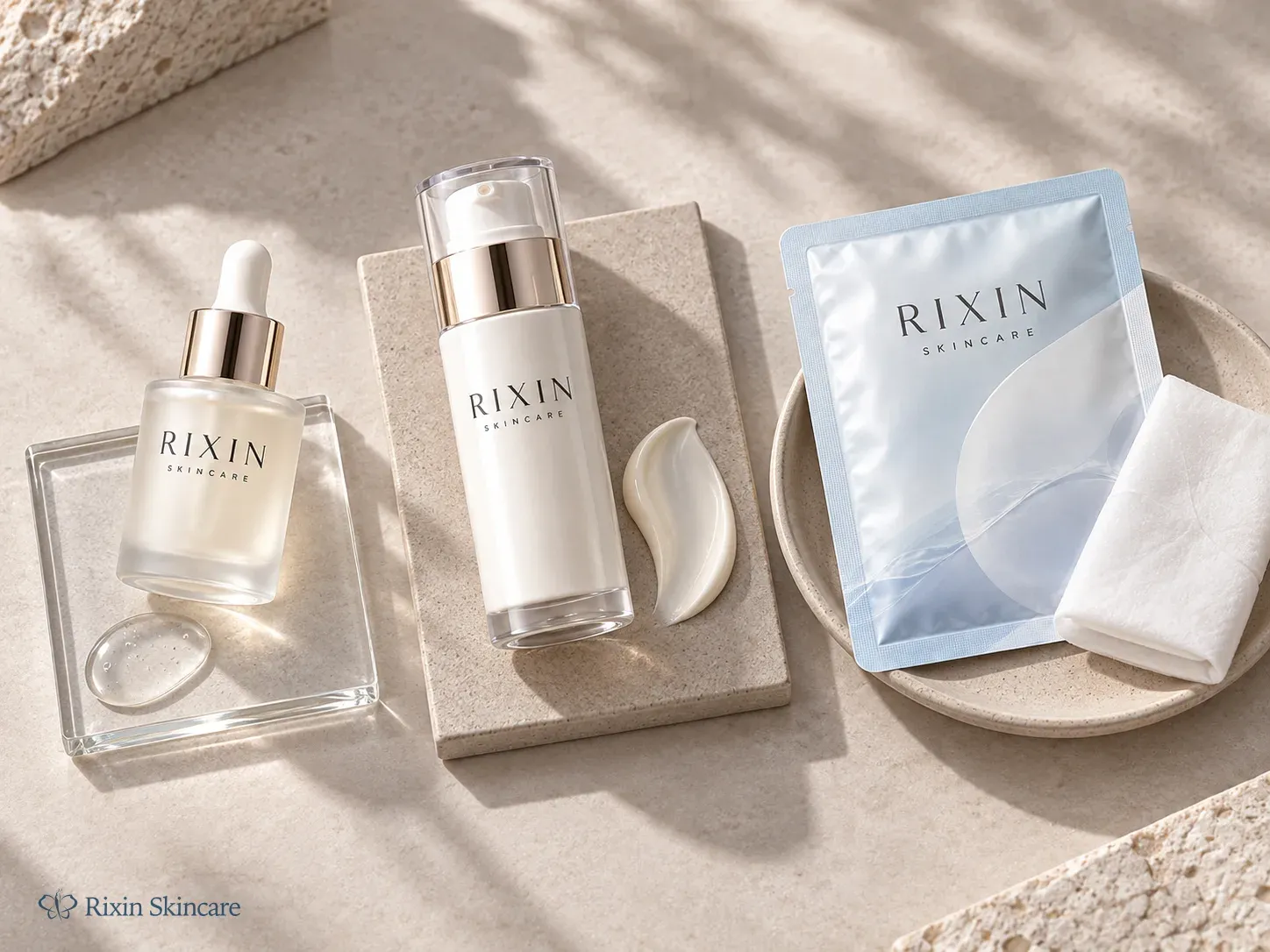
6. When a PDRN Set Makes More Sense Than One SKU
A multi-product PDRN line can make sense when the products have different jobs.
| Launch option | Likely product-line role | Strongest reason to include it in phase one |
|---|---|---|
| PDRN serum | Main ingredient-led hero SKU | One product can carry the PDRN concept clearly with a focused launch scope |
| PDRN moisturizer | Routine anchor or daily-use support | It adds a distinct routine role rather than repeating the serum |
| PDRN mask | Complementary or experience-led SKU | It adds a clear use occasion or customer experience worth the extra development and packaging scope |
| PDRN set | Coordinated multi-product assortment | Each SKU has a distinct job and the business can support the broader manufacturing and operating scope |
For example, a planning structure could look like:
- Hero serum: carries the main PDRN ingredient story.
- Moisturizer: supports the routine as a daily-use follow-up step.
- Mask: adds a complementary or occasional-use format.
That is a line-architecture example, not a fixed manufacturing package.
It does not mean every PDRN project should use those three SKUs, that one formula route applies across them, or that Rixin offers one standard prebuilt PDRN set with fixed quantities, packaging, or timing.
A coordinated set becomes more defensible when:
- each SKU has a distinct role;
- the customer can understand why the products belong together;
- the business can support the quantity and packaging scope across the range;
- formula and package decisions can be reviewed in parallel; and
- the launch does not depend on unsupported claims about the ingredient.
If the project is moving toward a coordinated multi-product launch, Private Label Skincare Sets and Product Line Manufacturing covers the broader commercial manufacturing route.
7. Decide What Belongs in Phase One
A PDRN line can be broader in the roadmap than it is in the first production order.
That distinction is useful because ingredient-led concepts often create many possible extensions before the exact material, formula, packaging, quantity, and approval workload are fully understood.
A practical phase-one review can separate products into three groups.
Essential for the First Launch
These products are necessary for the intended customer proposition.
If the launch is built around one hero PDRN serum, that serum may be the only essential SKU.
If the proposition is a coordinated two-step routine, both products may be essential.
Useful but Can Wait
These products fit the brand but do not need to be ready on day one.
A mask, richer moisturizer, alternate serum texture, travel size, or other extension may belong here depending on the concept.
Keeping these products in the roadmap avoids turning every good idea into an immediate formula, packaging, approval, and inventory commitment.
Requires Manufacturer or Material Confirmation
Some products may look attractive conceptually but should not be locked into phase one until the exact PDRN material and product system are reviewed.
This can include questions about:
- material identity;
- supplied form;
- formula compatibility;
- package suitability;
- evidence;
- target market; or
- supplier documentation.
The objective is not to minimize the line at all costs.
It is to build the smallest first-launch PDRN scope that still delivers the product proposition you intend to sell.
8. Manufacturing Questions That Can Change the Assortment
A product-line plan can change after manufacturing review.
That is normal.
The buyer may begin with a serum, moisturizer, and mask concept, then discover that one SKU requires a different package, a different formula route, additional supplier information, or more development work than expected.
Several questions can influence whether a product remains in phase one.
What Exact PDRN Material Is Being Evaluated?
The term PDRN does not define one universal commercial material.
The project should confirm the supplier reference or material direction, source information where relevant, composition, proposed INCI, physical form, molecular information if provided, carrier, and available documentation.
The current ingredient page also notes that PDRN and PN terminology should not be treated as interchangeable without comparing the actual material definitions.
That material-level review should remain separate from the assortment decision.
Does the Supplied System Fit the Intended Formula?
A selected material may come with its own carrier, physical form, concentration basis, solubility or dispersibility, storage guidance, or processing recommendations.
Those details can affect whether the original serum, moisturizer, or mask concept remains practical.
Do not assume the ingredient name alone answers those questions.
Does the Packaging Fit the Formula?
A serum may need one dispensing system, a moisturizer another, and a mask a pouch or other format.
Compatibility, viscosity, filling, dispensing, package contact, and component sourcing can affect both individual SKUs and the line as a whole.
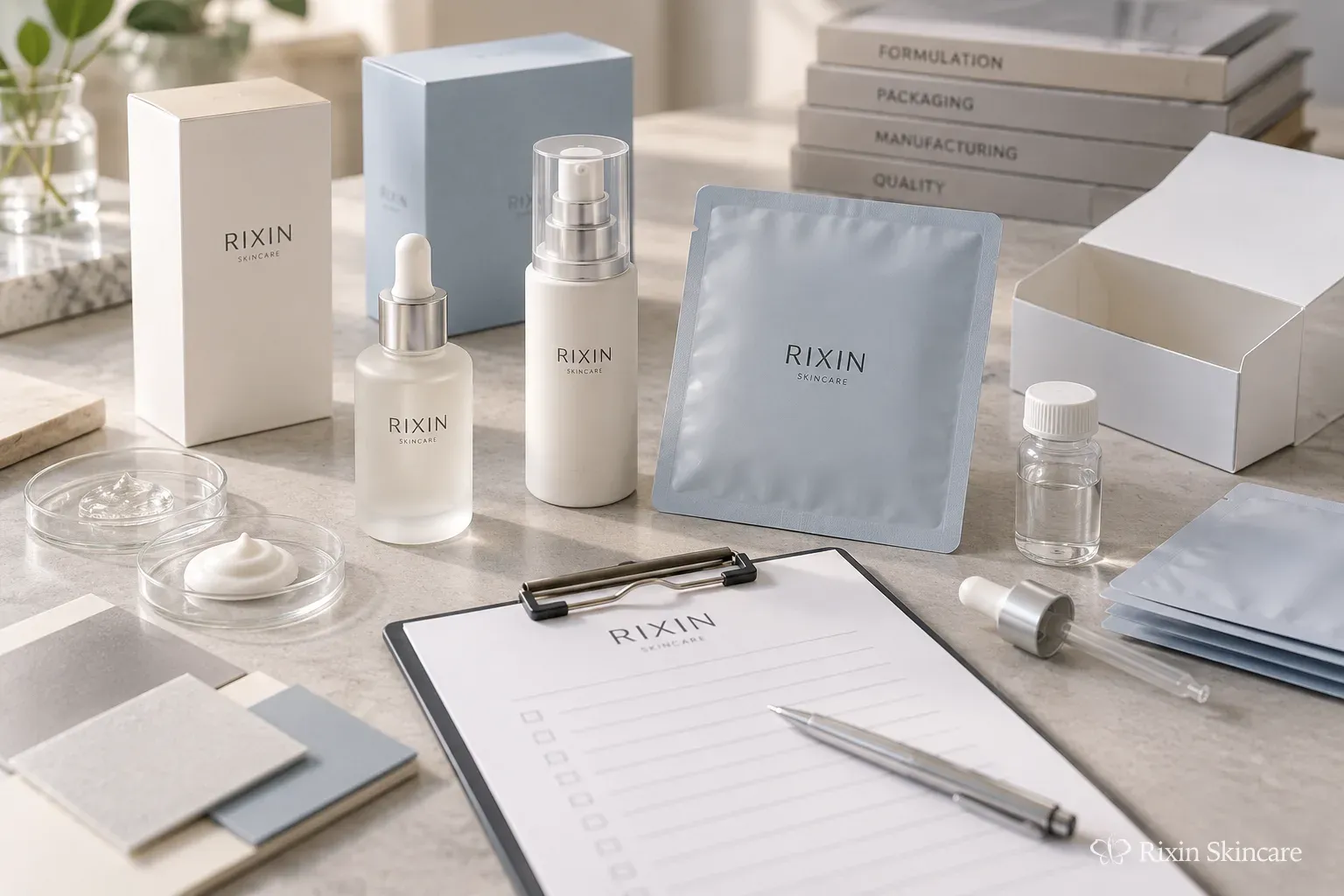
Can the Quantity Plan Support the Line?
A three-SKU concept is not one quantity decision.
Finished-product quantities, packaging components, cartons, decoration, and supplier minimums may create different constraints across products.
That can influence whether one product should move to a later phase.
How Much Review and Approval Work Is Required?
Each additional SKU can introduce its own samples, packaging decisions, artwork, documentation questions, testing requirements, and approval status.
A broader assortment may still be appropriate, but those dependencies should be visible before the launch scope is locked.
What Market and Claim Direction Is Intended?
The target market can affect documentation, testing, labeling, and claim review.
For PDRN specifically, keep the positioning cosmetic and appearance-focused unless stronger wording is supported by the exact finished-product evidence and market review.
Ingredient or supplier research does not by itself prove a new finished serum, moisturizer, or mask.
9. Keep the PDRN Story Cosmetic and Material-Specific
Keep the market-facing PDRN story within cosmetic, appearance-focused positioning. Depending on the selected material, formula, evidence, and target market, directions may include hydration, smoother-looking texture, elasticity or firm-looking appearance, and age-supporting care.
Those are positioning directions, not automatic finished-product claims. Do not transfer injectable, tissue-regeneration, wound-care, or clinical-treatment language into ordinary cosmetic marketing, and do not treat supplier or ingredient-level research as proof for a finished serum, moisturizer, mask, or set.
The exact material, formula, supporting evidence, testing, and target market still determine what finished-product wording is supportable. The fuller material-identity, evidence, and claim boundary belongs on the PDRN ingredient page.
10. What to Prepare for a PDRN Line Review
A manufacturer can give a more useful response when the buyer distinguishes confirmed decisions from open questions.
Before requesting a detailed review, prepare:
- the selected PDRN material or source direction, if available;
- target market;
- intended hero SKU;
- first-launch product formats;
- the role of each SKU;
- formula route or open formulation questions;
- packaging direction;
- expected quantity direction by SKU;
- documentation or evidence needs;
- products intentionally deferred to later launch; and
- the main decisions you need the manufacturer to review.
If the exact PDRN material has not been selected yet, say so.
A useful brief can state that the project is evaluating a PDRN direction while leaving supplier identity, exact material specification, or source route open for review.
That is better than treating an unconfirmed material assumption as a fixed requirement.
Use Project Requirements for the broader information to prepare before manufacturer review.
11. Serum, Moisturizer, Mask, or Set: The Practical Decision
Choose a PDRN serum as the first hero SKU when one product can carry the ingredient story clearly and the brand wants a focused initial manufacturing scope.
Add a PDRN moisturizer when it has a distinct routine role and the added emulsion, packaging, quantity, and approval work is justified.
Add a PDRN mask when it contributes a real complementary or experience-led role rather than simply making the line look larger.
Choose a multi-product PDRN set when the customer proposition genuinely depends on the assortment, each product has a clear job, and the business can support the added manufacturing and operating scope.
Do not lock the final structure around the word “PDRN” alone.
The exact supplier material still needs to be reviewed for identity, supplied system, formulation fit, packaging, evidence, and target market before technical assumptions or finished-product claims are finalized.
If you are planning a coordinated multi-SKU project, confirm the first-launch scope and open questions before you request a proposal for project review.